
Safety Intelligence Insights
Practical guides on AI-powered detection, automated workflows, predictive analytics, and building a prevention-first culture.
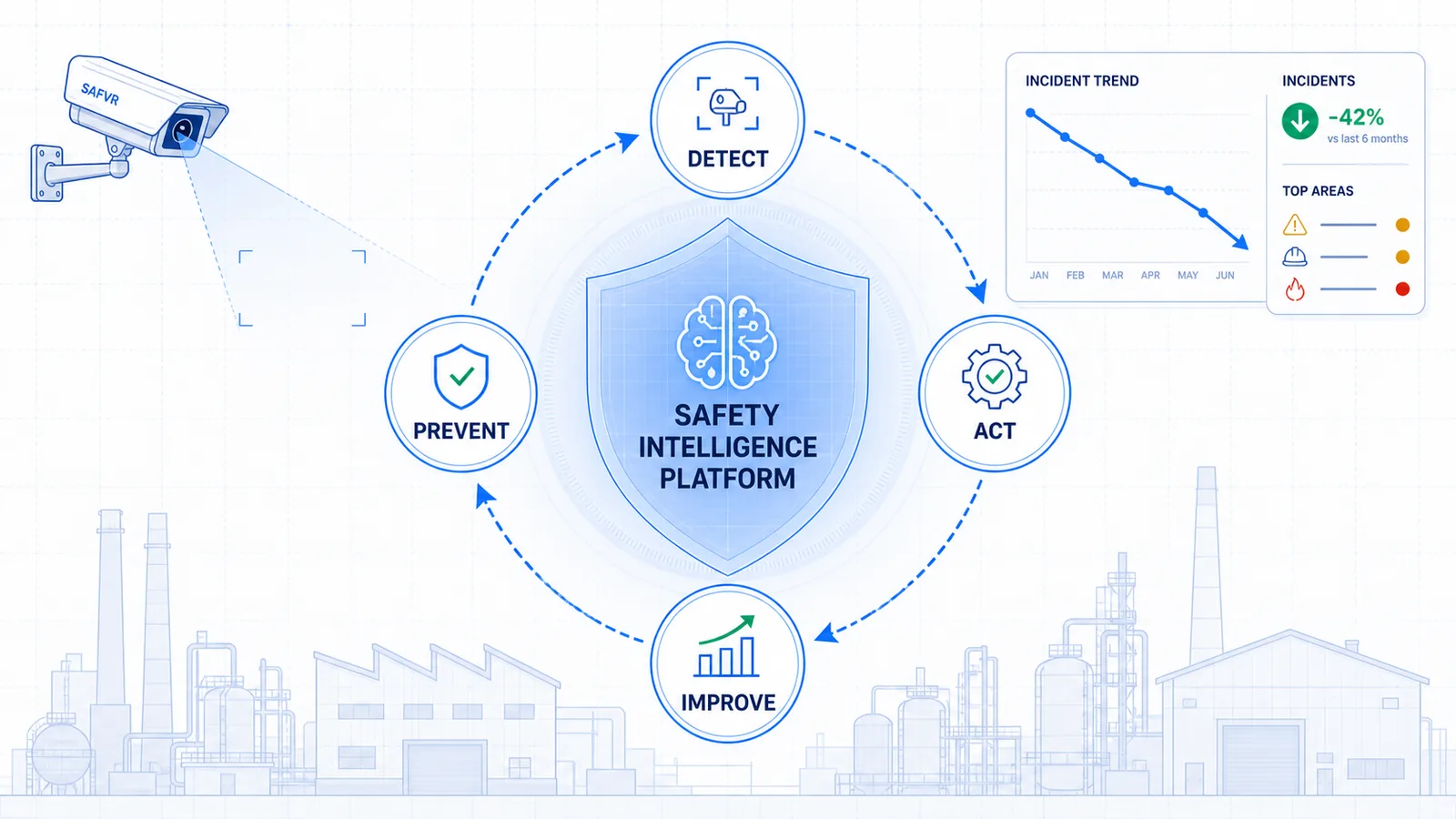
What Is a Safety Intelligence Platform? (And How It Differs from EHS Software)
A safety intelligence platform is an AI-powered system that continuously detects unsafe acts and conditions using existing cameras, automates safety workflows, delivers site-specific micro-training, and predicts preventable risk events before they occur. Unlike traditional EHS software, it closes the loop from detection to prevention in real time.
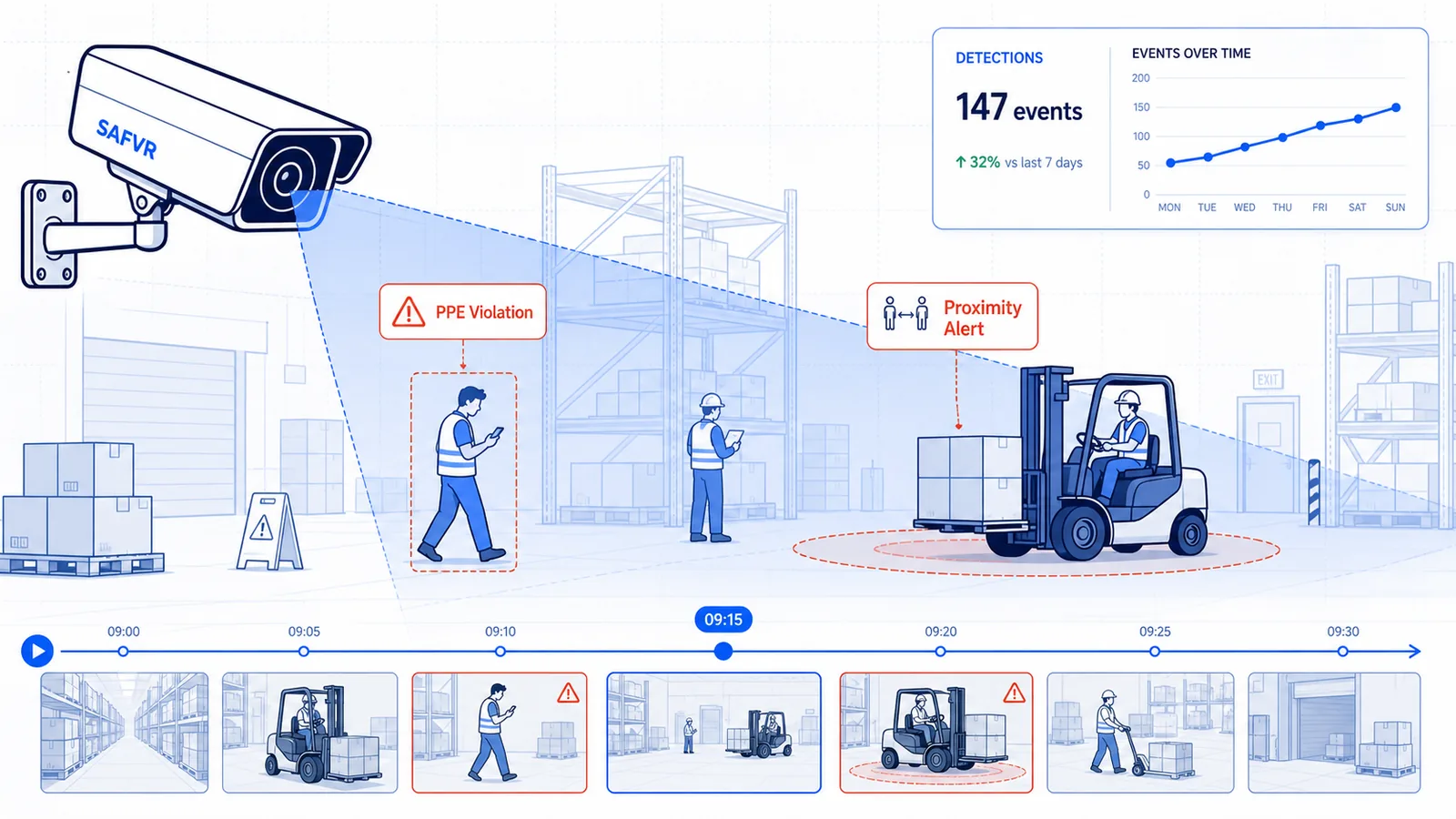
AI Hazard Detection for Existing Cameras: The Complete 2026 Guide
AI hazard detection uses computer vision to analyze live feeds from your existing IP cameras, identifying unsafe acts and conditions in real time without requiring new hardware. Most industrial facilities can deploy within 4–6 weeks using their current CCTV infrastructure, turning passive recording into Live Site Intelligence.
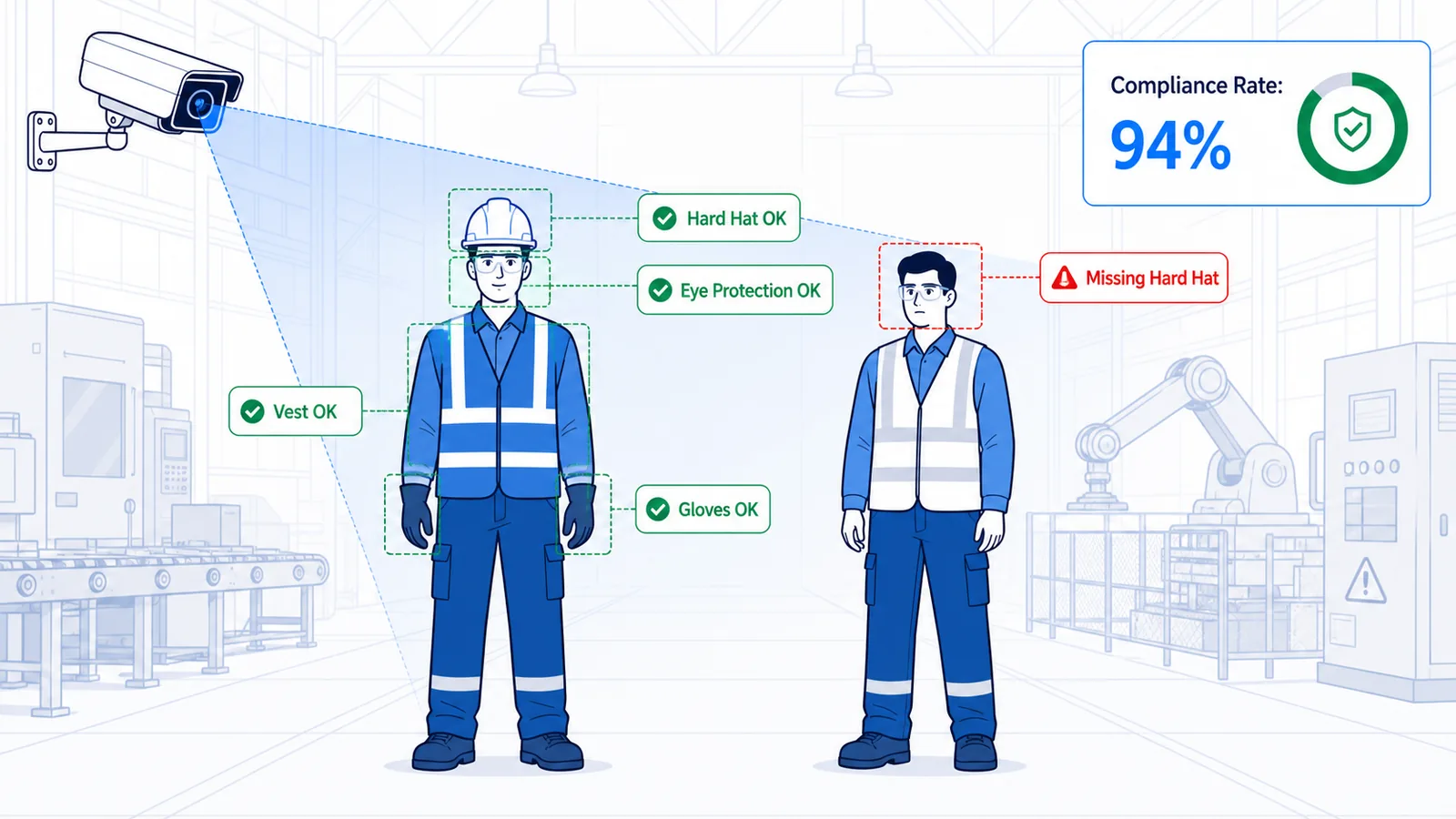
PPE Detection AI: How Computer Vision Is Reinventing Workplace Safety
PPE detection AI uses computer vision and existing IP cameras to monitor whether workers are wearing required safety gear — hard hats, safety vests, gloves, eye protection — in real time. When a violation is detected, the system triggers alerts, automates compliance workflows, and generates site-specific training to prevent recurrence.
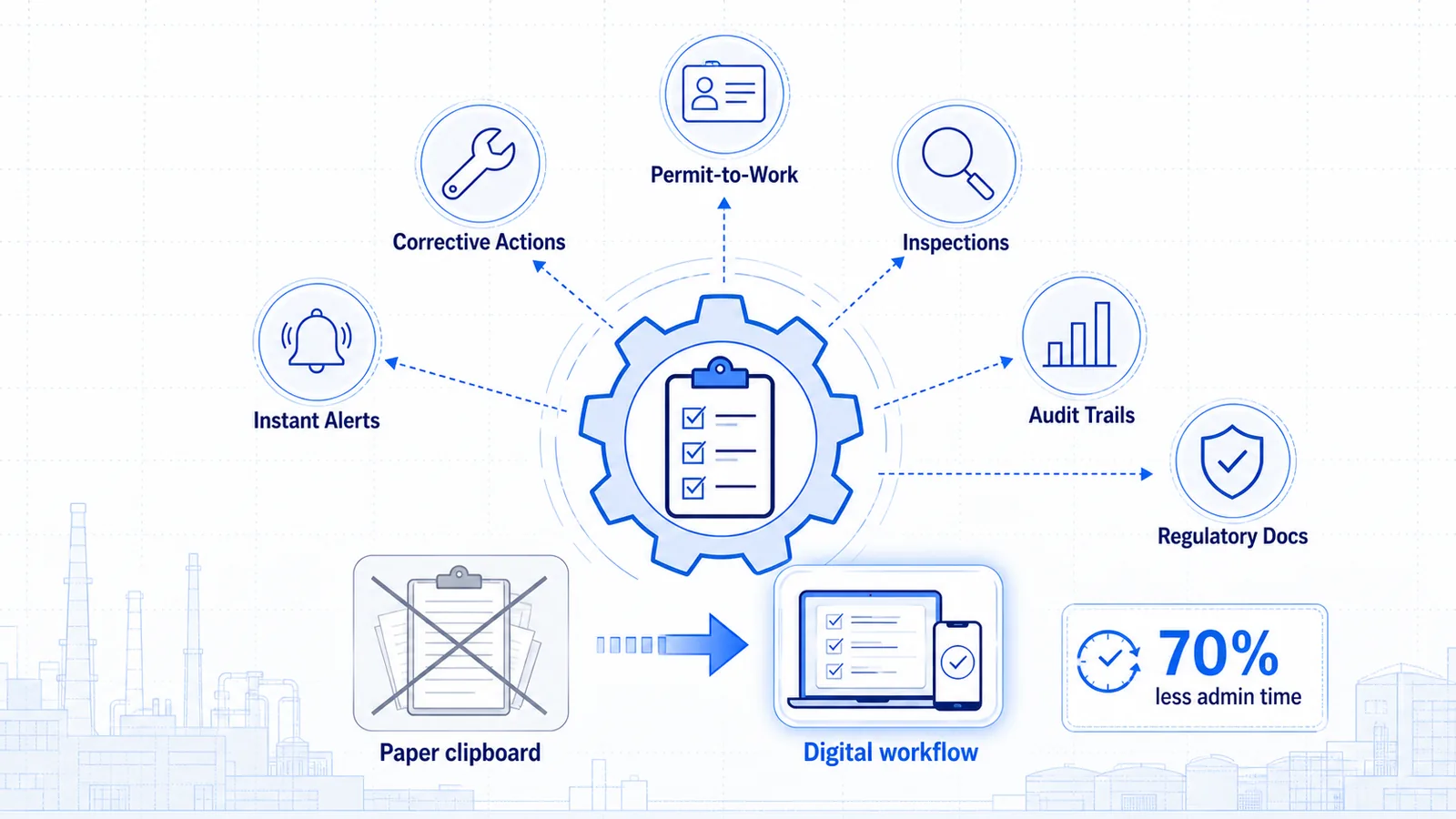
Safety Compliance Automation: From Manual Checklists to Intelligent Workflows
Safety compliance automation replaces paper checklists and manual follow-ups with intelligent workflows that detect hazards, assign corrective actions, track permit-to-work status, and generate audit trails automatically — cutting administrative burden by up to 70% while improving accountability.
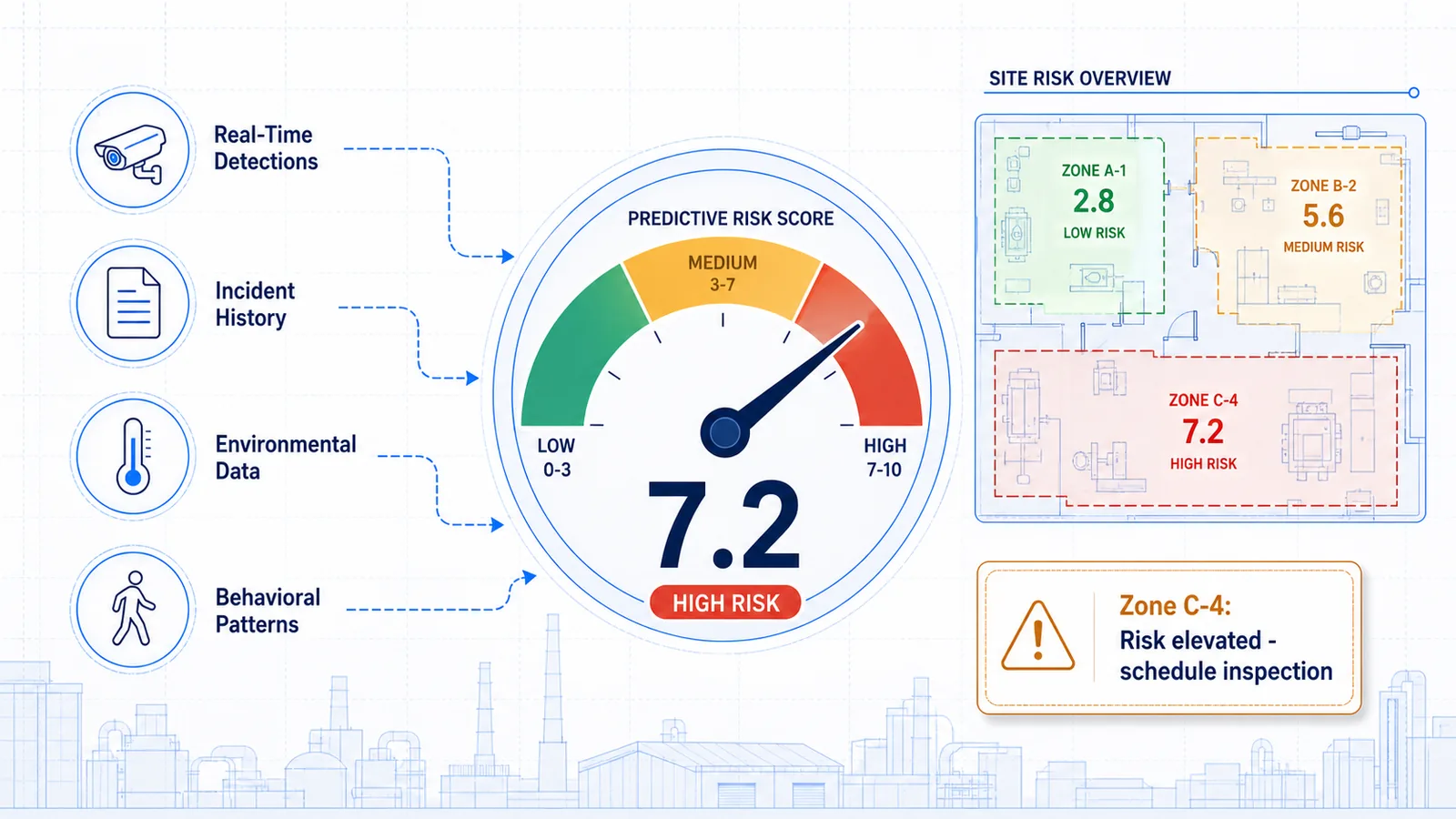
Predictive Risk Scoring in Workplace Safety: From Data to Decisions
Predictive risk scoring combines real-time detection data, historical incident records, environmental conditions, and behavioral patterns into a single risk score that forecasts where incidents are most likely to occur. Unlike static risk matrices, these scores update continuously and trigger specific interventions.
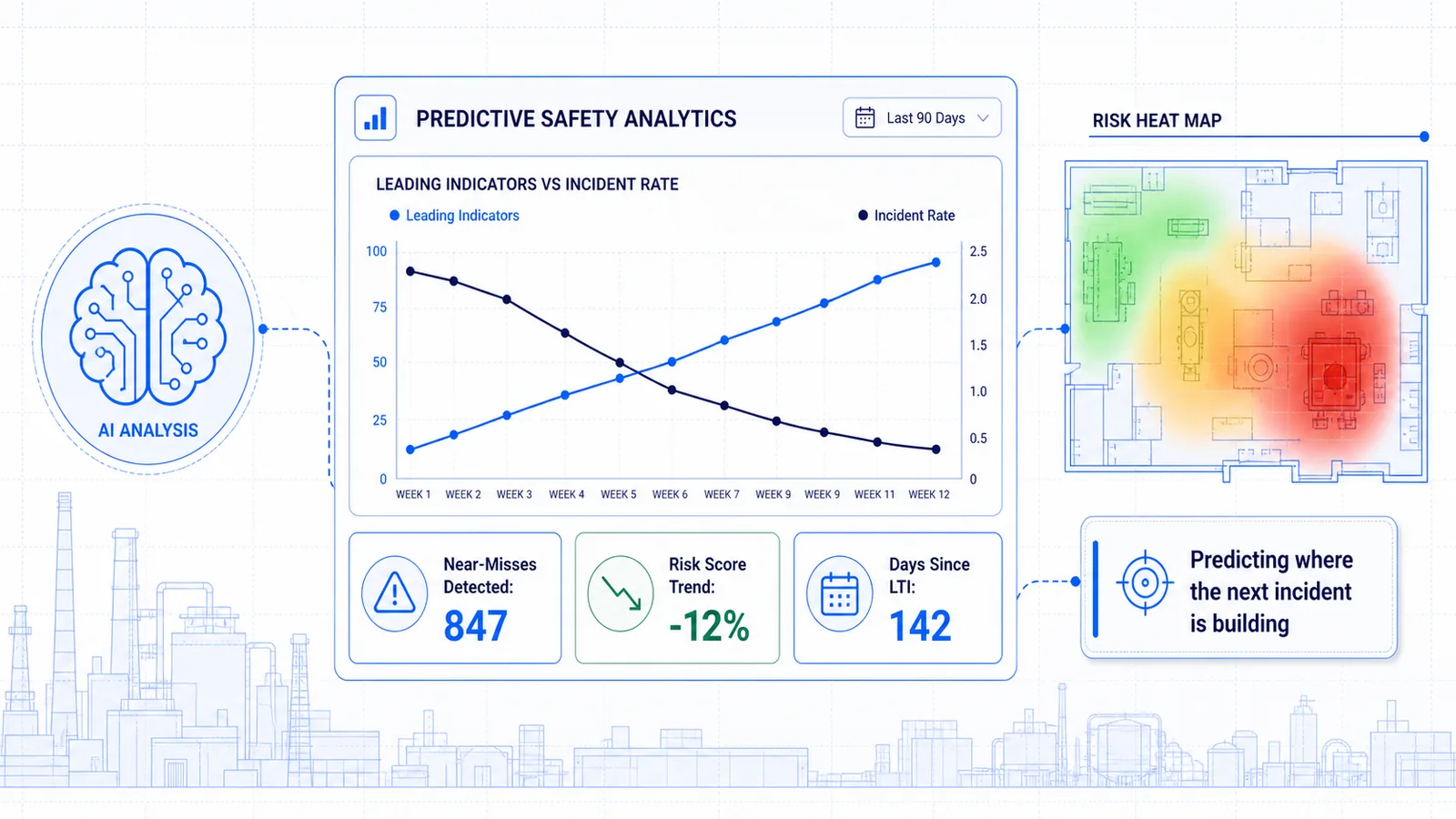
Predictive Safety Analytics: How AI Stops Incidents Before They Start
Predictive safety analytics uses AI and statistical models to analyze safety data — camera detections, incident logs, audit results, training records — to identify risk patterns before they result in incidents. It surfaces leading indicators that show where the next incident is building, giving safety teams time to intervene.
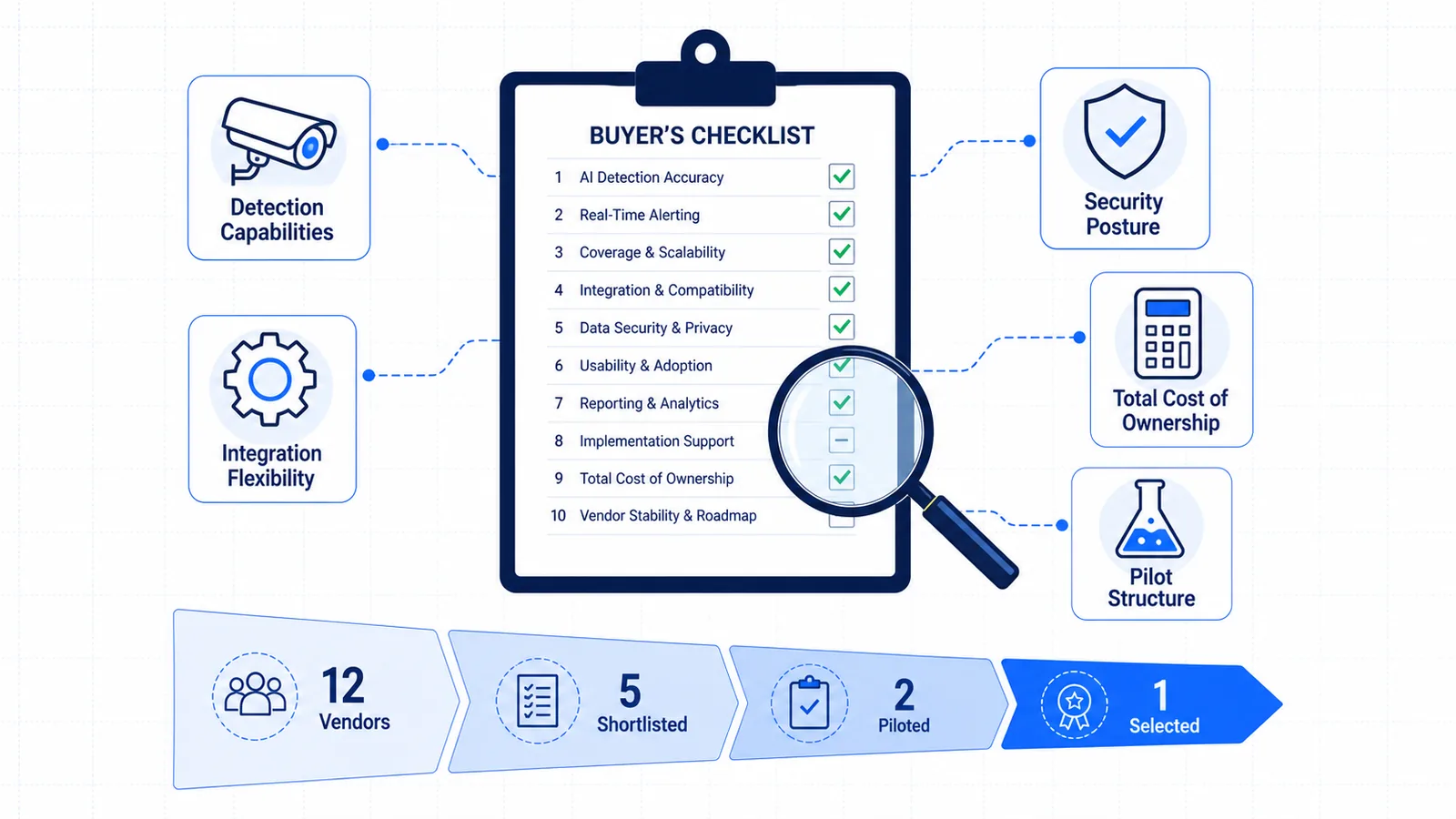
How to Evaluate a Safety Intelligence Platform: A Buyer’s Checklist for 2026
Evaluate safety intelligence platforms against a written operating scope, not a vendor-authored ranking. Require current documentation, classify features as native, integrated, manual, planned, or not verified, and test material claims on representative site footage with buyer-approved measures for detection quality, workflow completion, privacy, deployment, and total cost.
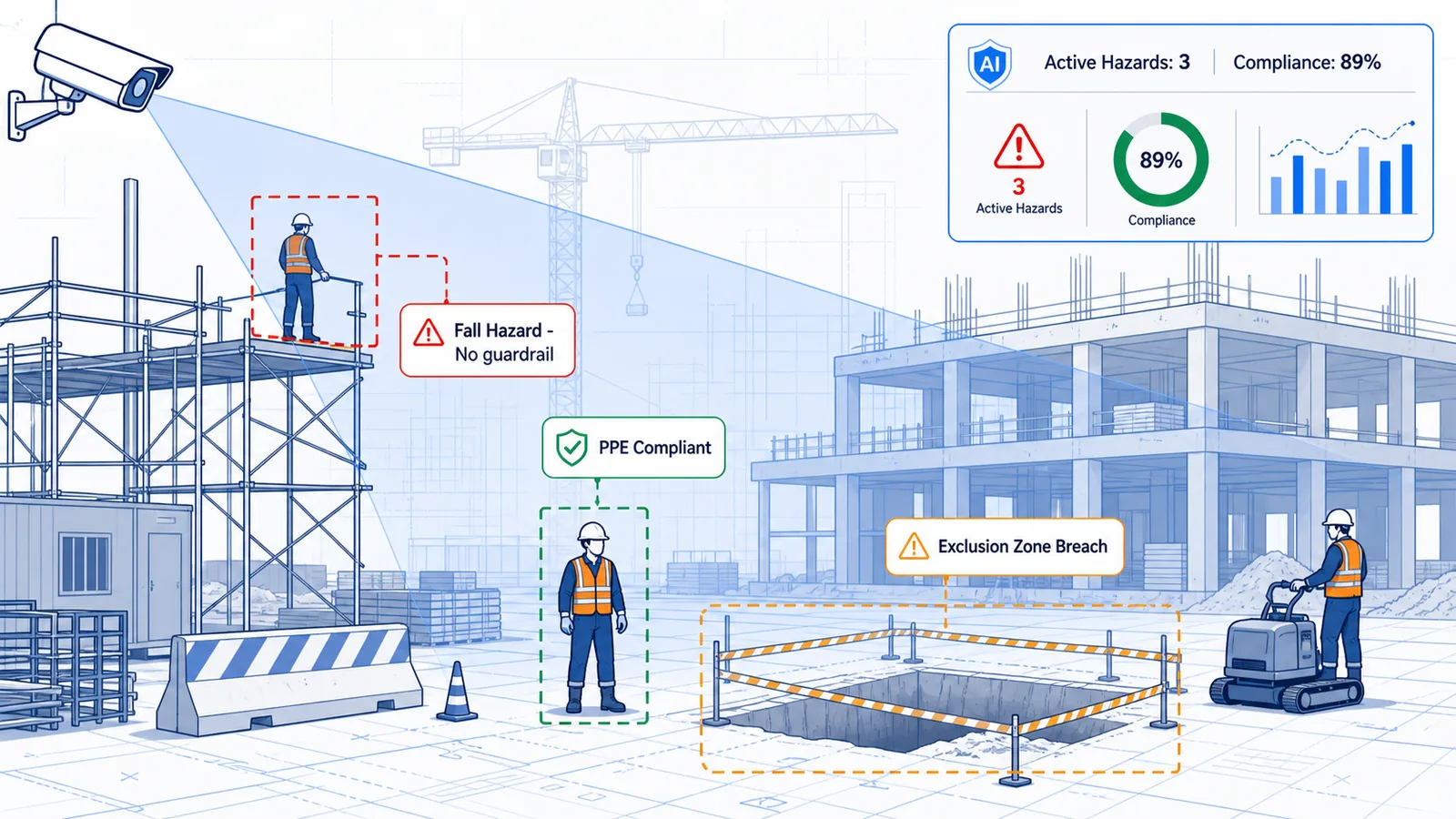
Construction Safety AI: Protecting Workers on Dynamic Job Sites
Construction safety AI uses computer vision and existing site cameras to detect PPE violations, fall hazards, exclusion zone breaches, and heavy equipment proximity risks in real time. Unlike static facility safety systems, it adapts as job sites evolve.
Manufacturing Safety AI: A Practical Guide for Plant Leaders
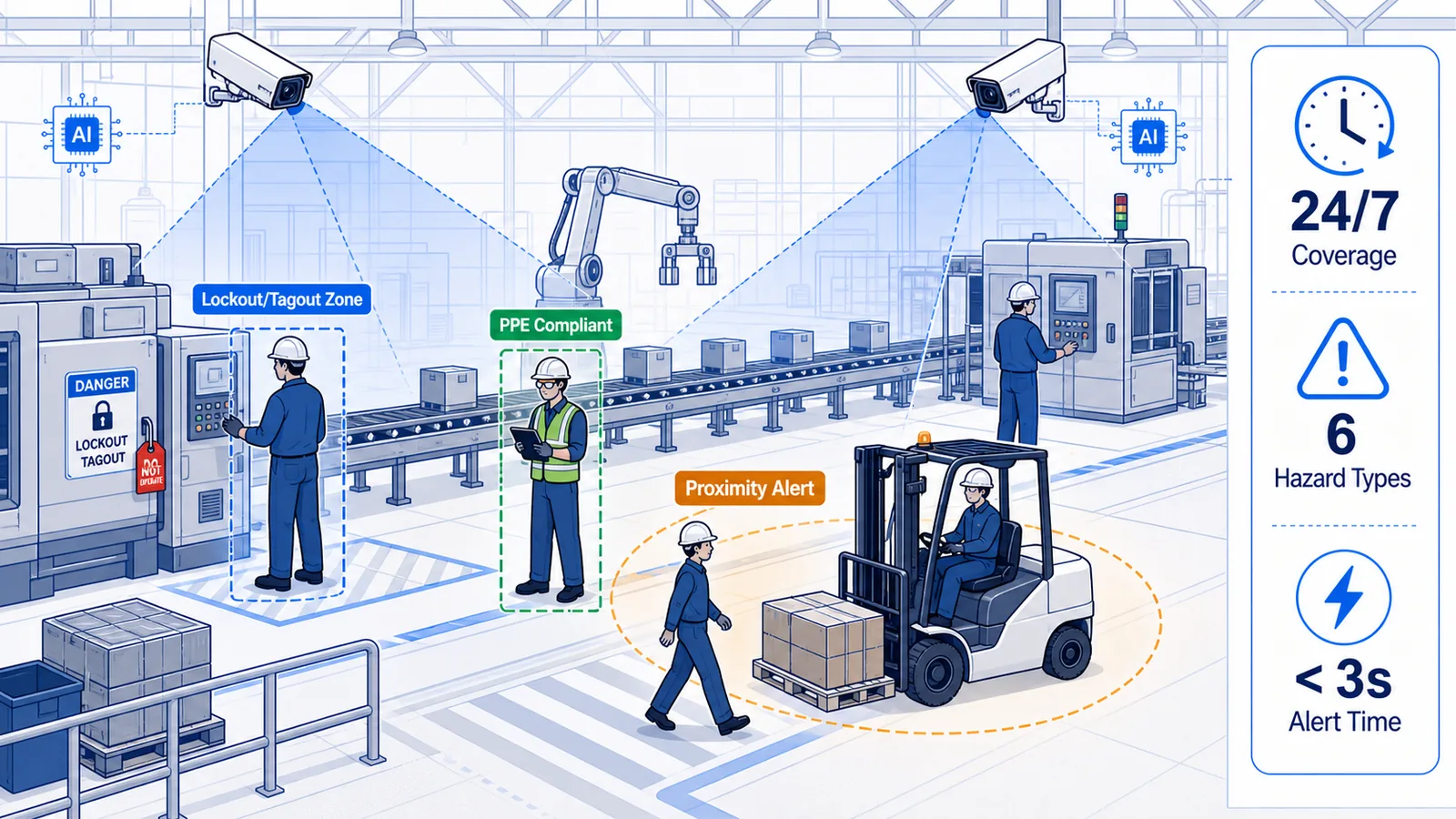
Manufacturing safety AI uses computer vision and existing facility cameras to detect unsafe acts and conditions in real time — from PPE violations on the production floor to forklift-pedestrian near-misses. It automates alerts, generates site-specific micro-training, and surfaces leading indicators before incidents trigger line stops or injuries.
Warehouse & Logistics Safety AI: Protecting Workers in High-Velocity Operations
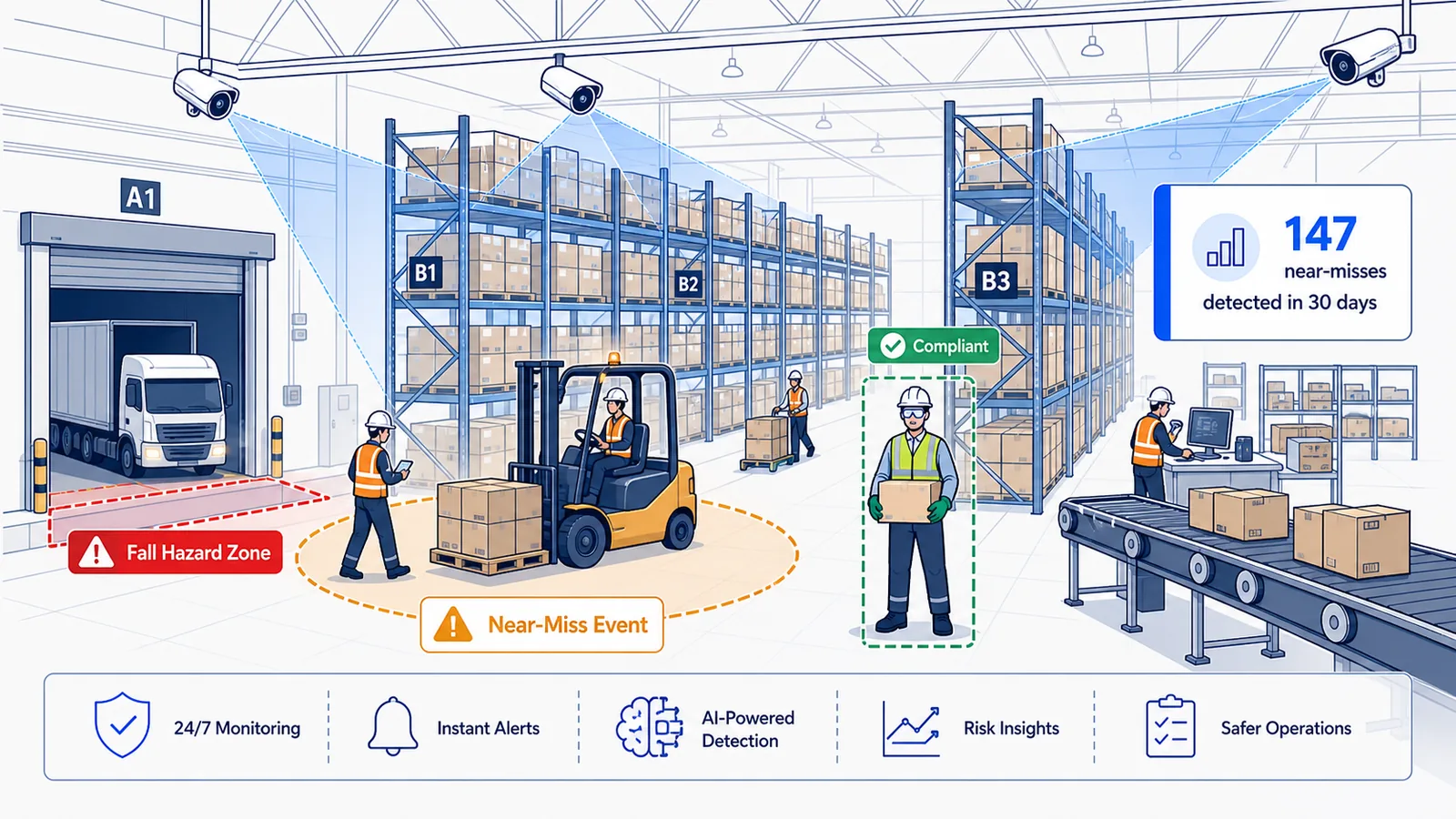
Warehouse and logistics safety AI uses computer vision and existing facility cameras to detect unsafe acts and conditions — including forklift-pedestrian near misses, PPE gaps, and dock edge hazards — in real time. For high-velocity logistics, it provides Live Site Intelligence that protects throughput while reducing preventable risk events.
Near-Miss Trend Analysis: Turning Close Calls Into Prevention Intelligence
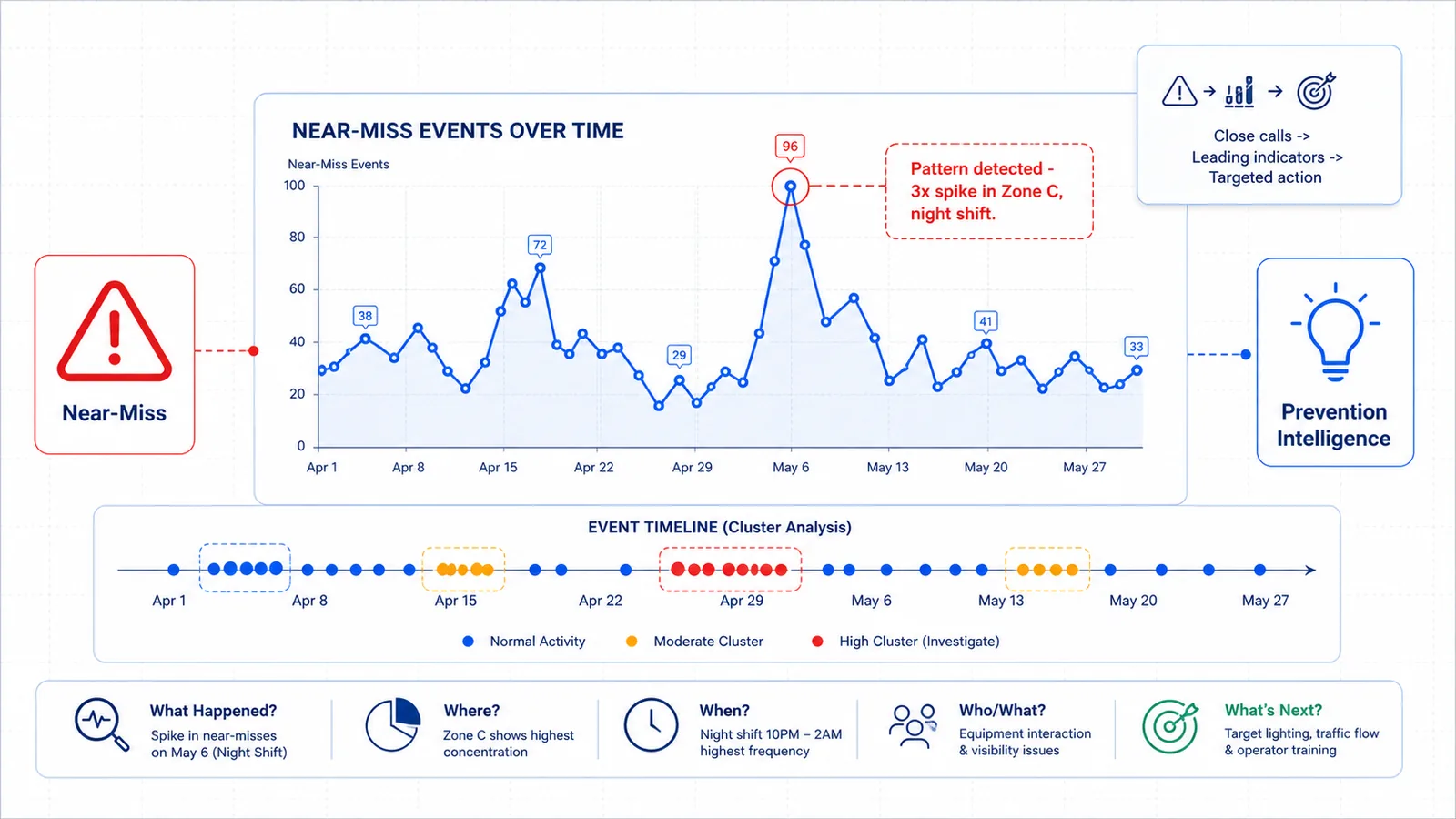
Near-miss trend analysis is the systematic process of collecting, categorizing, and analyzing close-call events to identify recurring patterns before they result in injury. By studying trends across time, location, behavior, and equipment, safety teams transform isolated reports into actionable leading indicators.
Repeat Incident Prevention: Breaking the Cycle of Recurring Safety Events
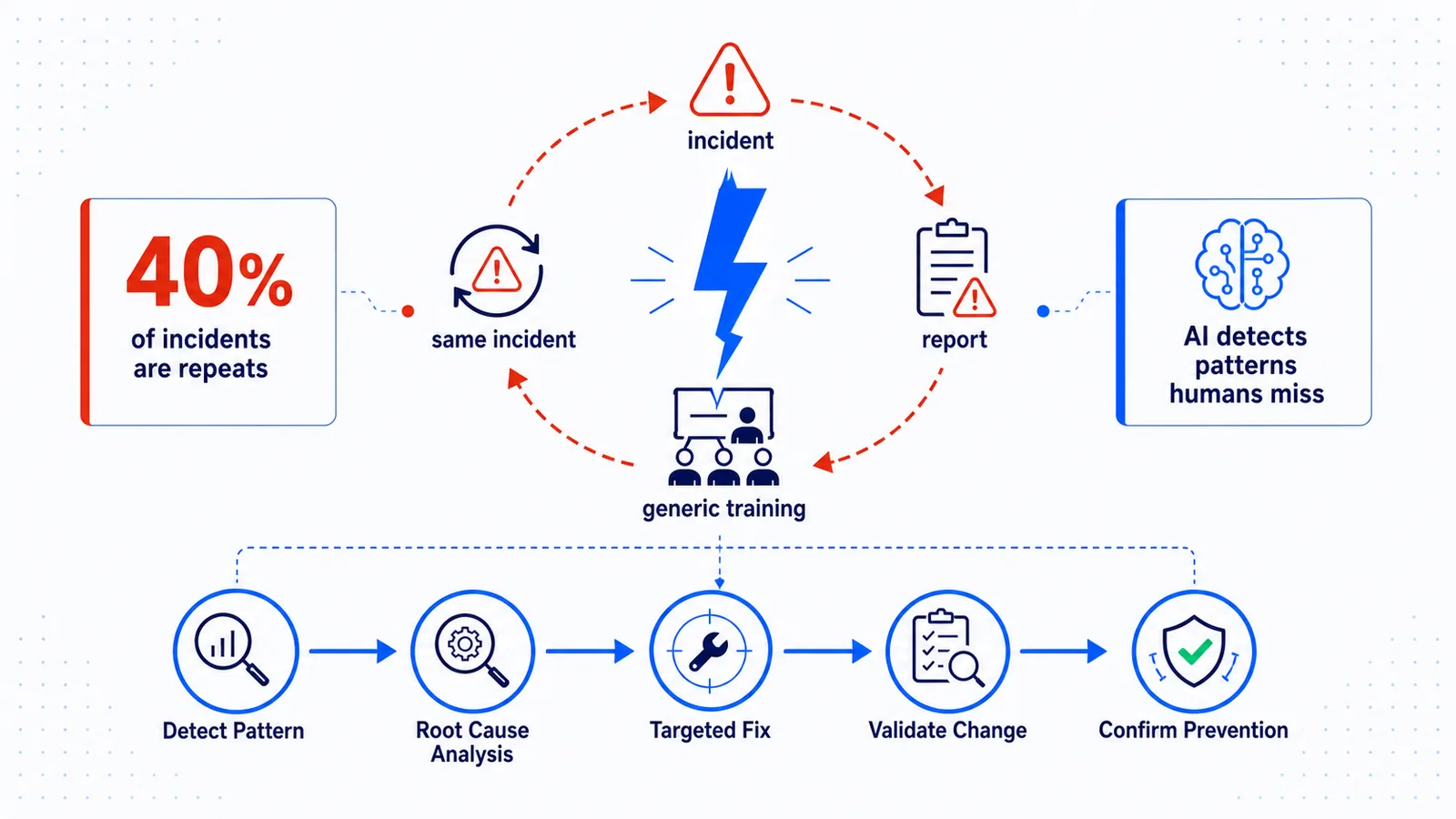
Repeat incident prevention identifies and eliminates the conditions that cause the same type of safety event to occur multiple times. It combines pattern detection across incidents, root cause analysis at scale, targeted corrective actions, and validation that changes actually work.
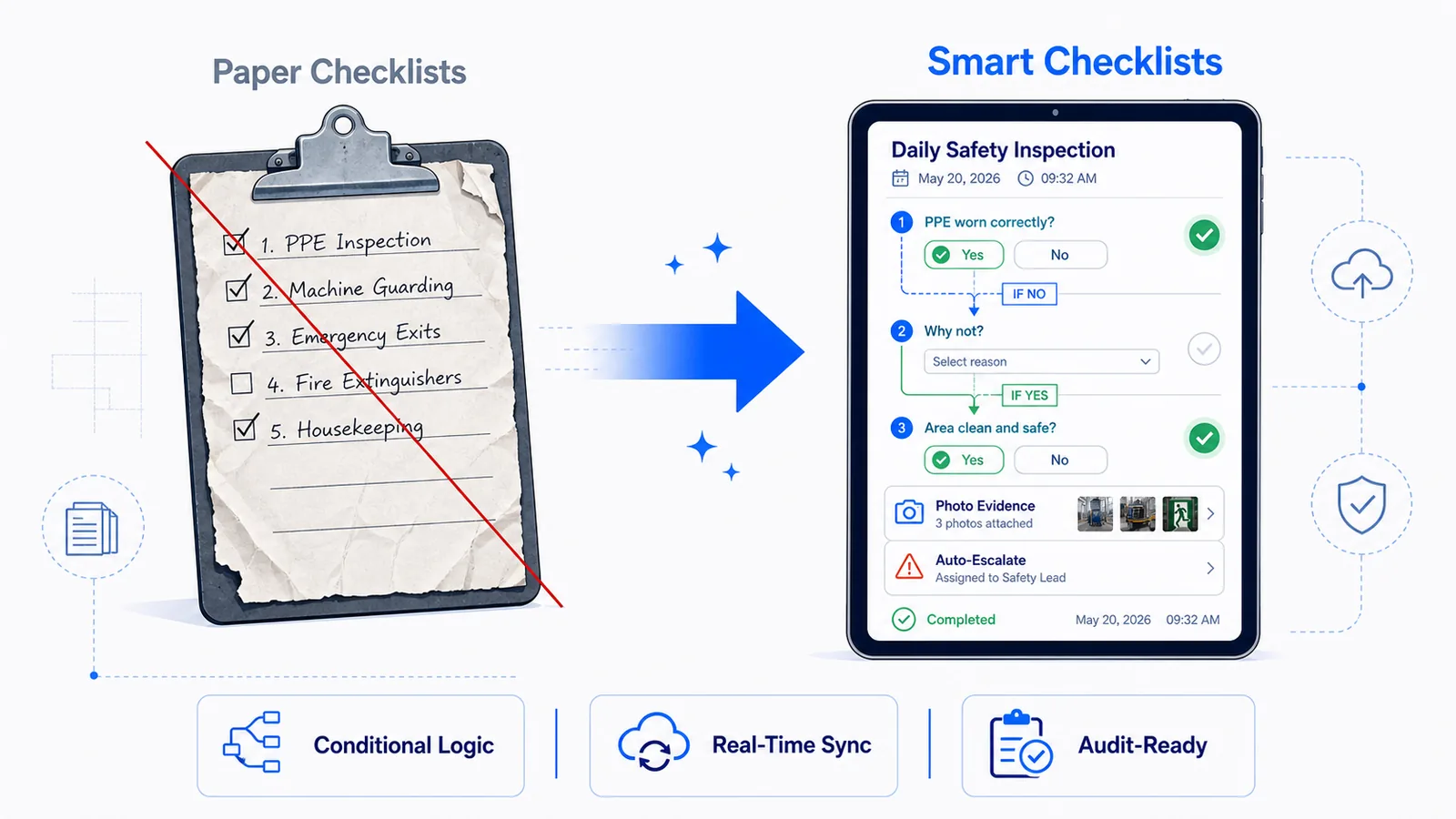
Smart Safety Checklists: Beyond Paper and Spreadsheets
Smart safety checklists are digital, adaptive inspection tools that replace paper with conditional logic, real-time validation, automatic audit trails, and integration with hazard detection systems. They reduce missed steps and generate structured documentation without manual data entry.
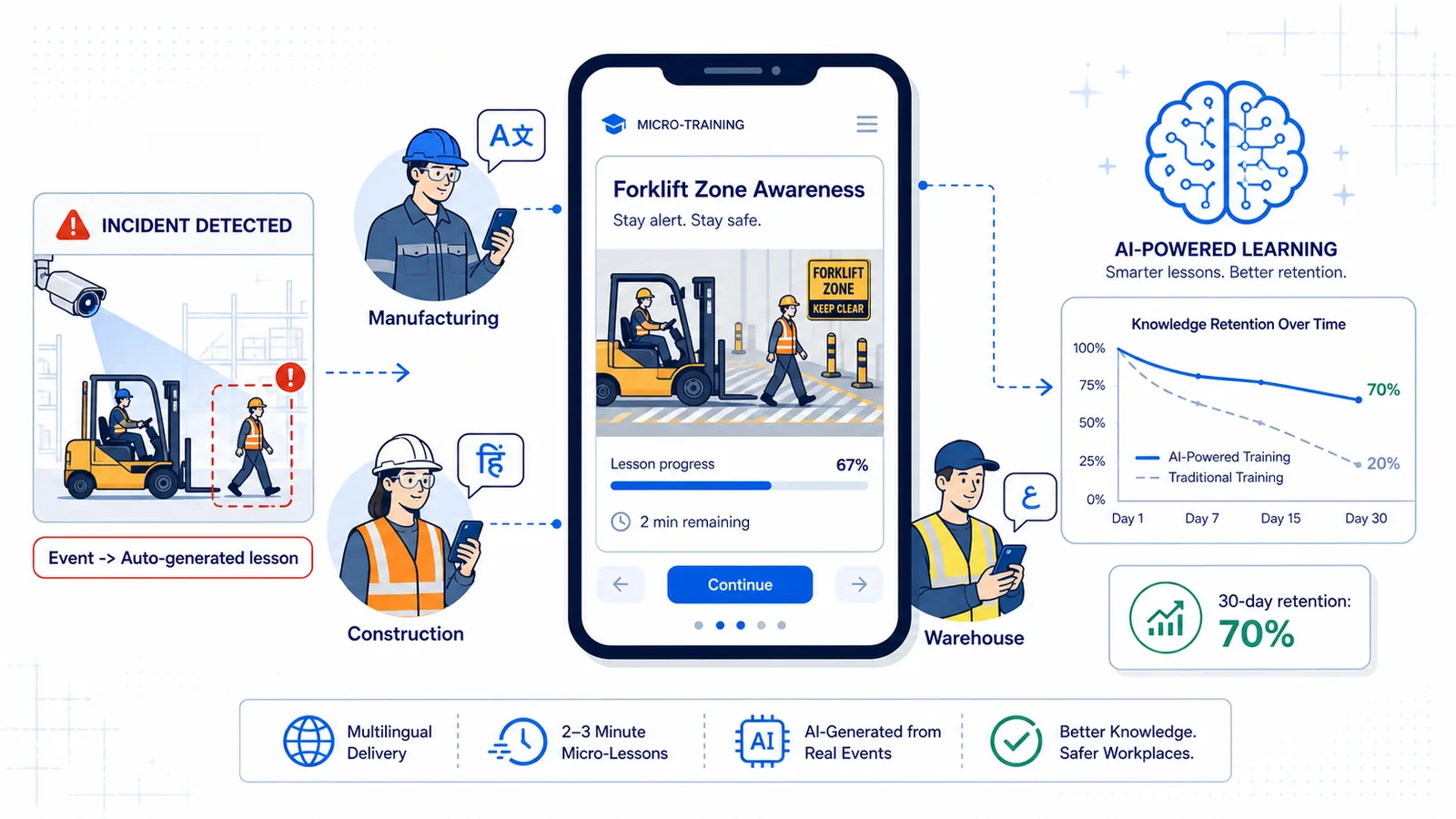
Frontline Worker Safety Training in the AI Era: What Actually Works
Most frontline safety training fails because it’s too long, too generic, and delivered in the wrong language. What actually works is adaptive training: short, site-specific lessons from real incidents, delivered in each worker’s language, completed in under three minutes.
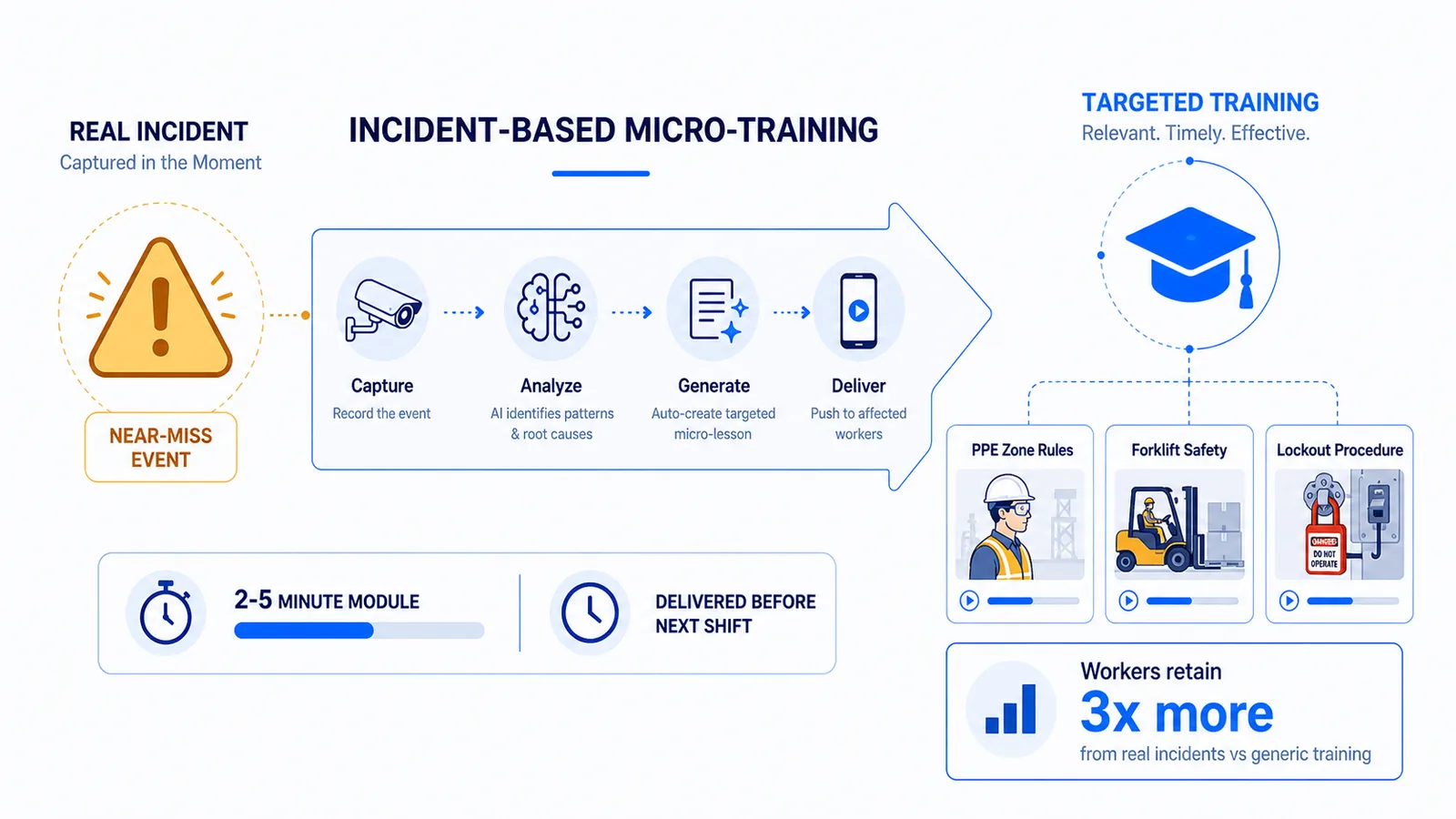
Incident-Based Micro-Training Explained: Turning Near-Misses into Learning
Incident-based micro-training automatically generates short, targeted training modules from real incidents and near-misses at your facility. Workers receive bite-sized lessons triggered by actual events — improving retention, relevance, and behavior change.
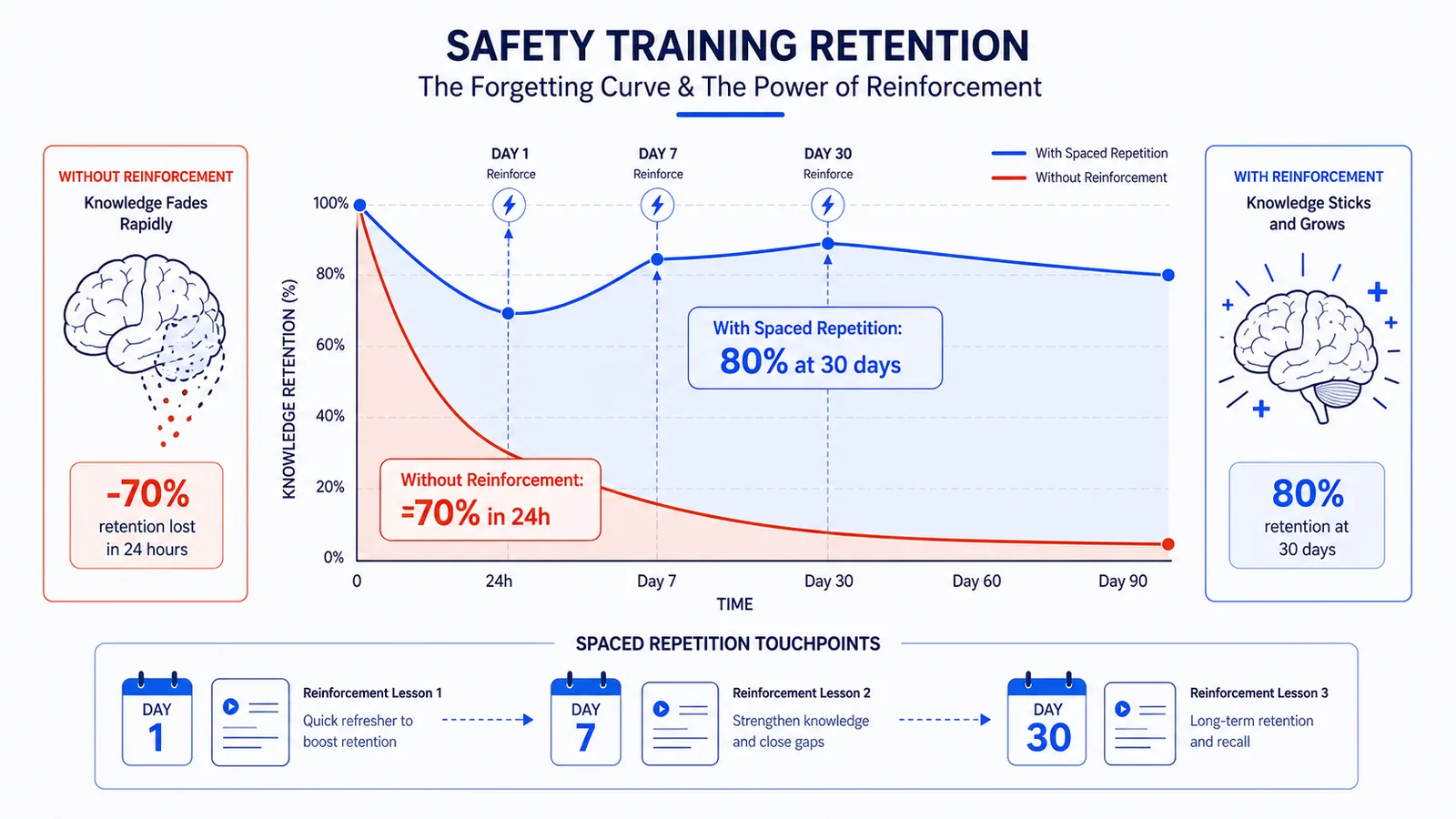
Safety Training Retention: Why Most Programs Fail (And How to Fix Them)
Most safety training is forgotten within 30 days due to the Ebbinghaus forgetting curve. Organizations can improve retention by replacing single annual sessions with microlearning, spaced repetition, and contextual, site-specific delivery tied to actual workplace risks.
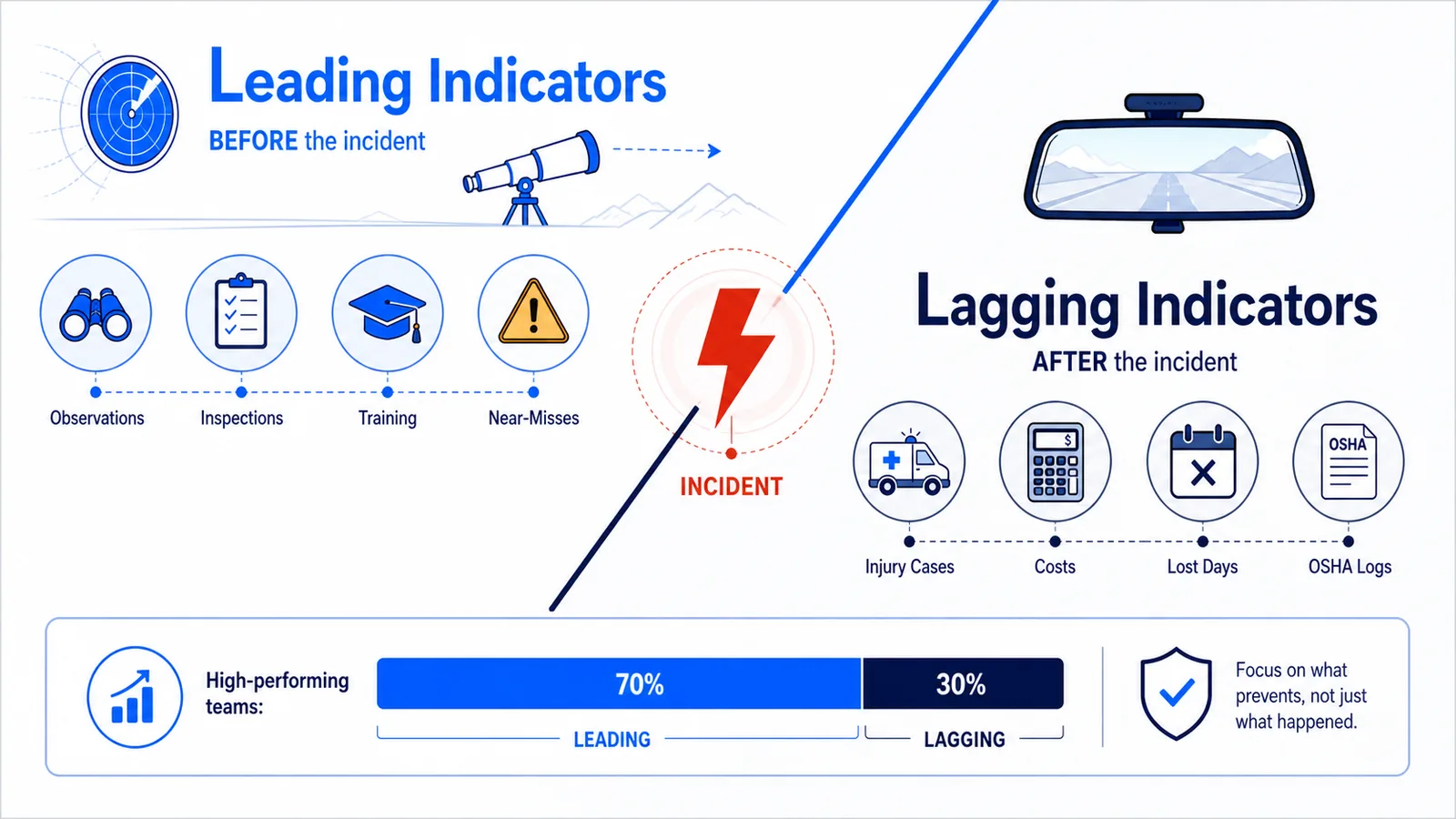
Leading vs Lagging Indicators in Safety: The Complete Guide for EHS Leaders
Leading indicators measure safety actions before incidents occur — near-miss reports, safety observations, training completion. Lagging indicators measure outcomes after incidents — injury rates, lost-time, workers' comp. High-performing EHS teams use a 70/30 mix of leading to lagging metrics.
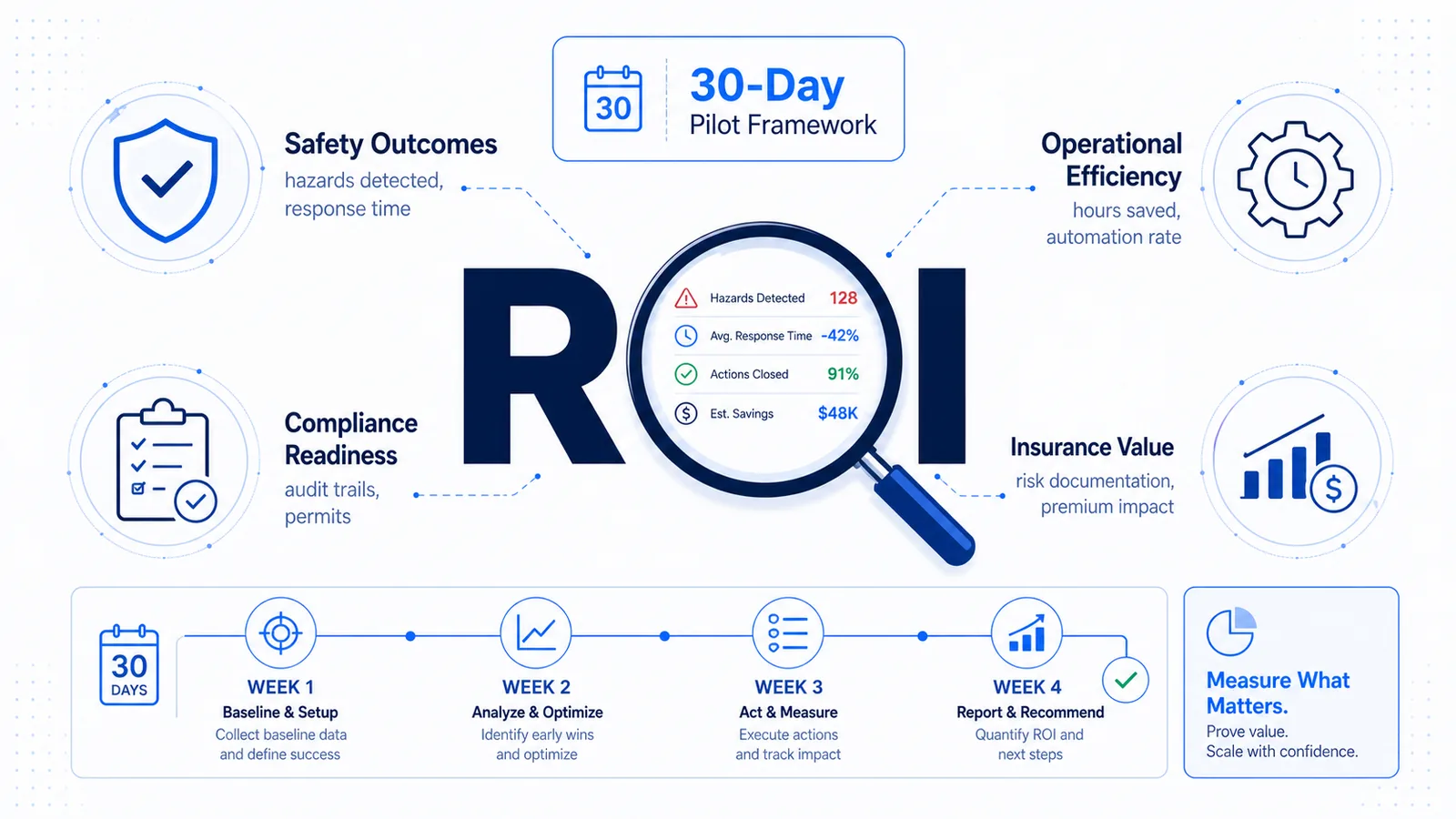
Safety Intelligence Pilot ROI: A Methodology for CFOs and EHS Leaders
A well-structured safety intelligence pilot should measure ROI across four dimensions: safety outcomes (hazards detected, response times), operational efficiency (manual hours eliminated), compliance readiness (audit trails, permit accuracy), and risk-review documentation. Results vary by site, baseline risk, and rollout quality.