012022
Walkthroughs, not dashboards.
Our founders spent months on factory floors and construction sites — clipboards, near-miss logs, end-of-shift reports. The data was always late. The hazards never were.
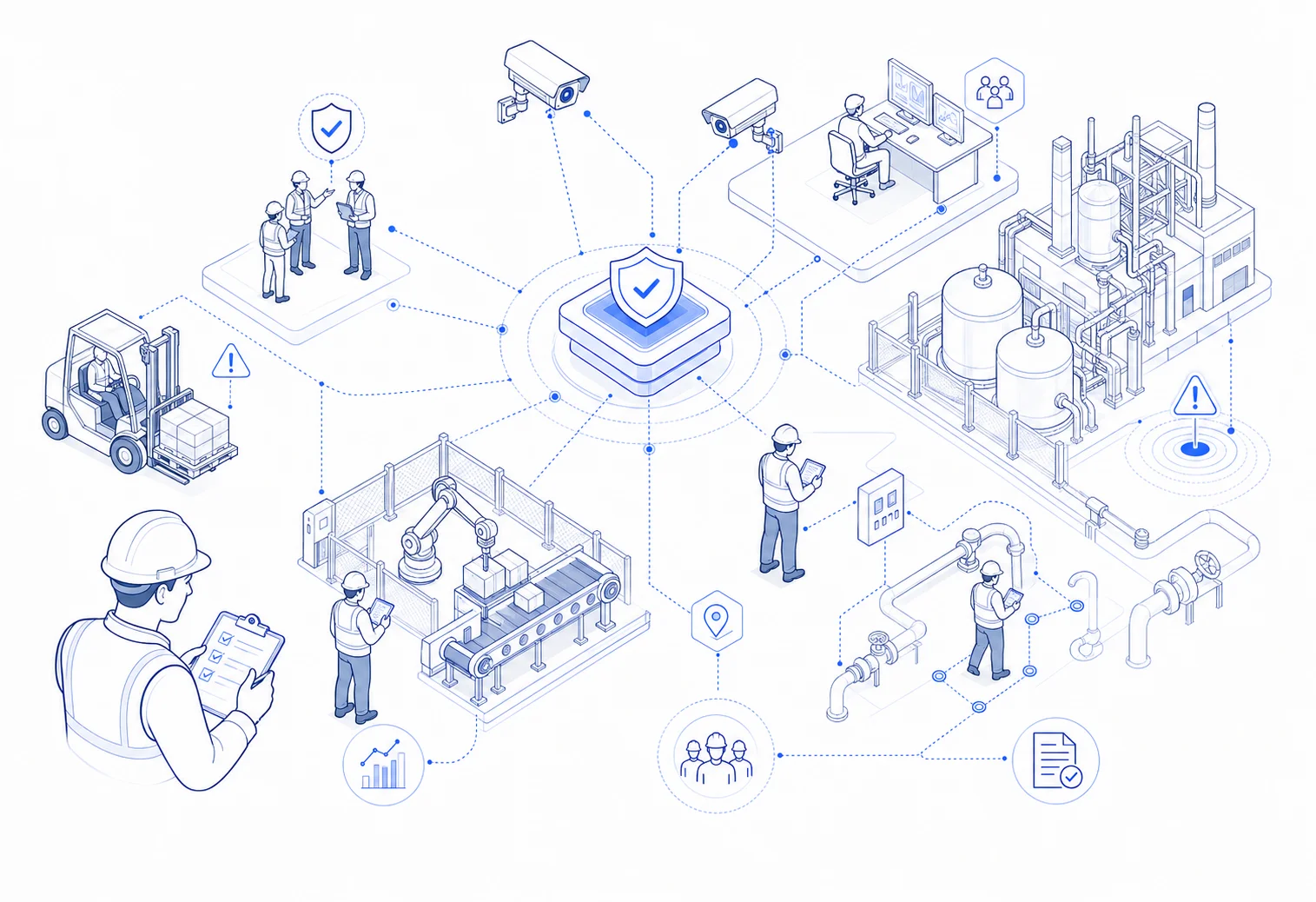
SAFVR is a Safety Intelligence Platform. AURA — the AURA Engine — runs the loop your sites already need: DETECT → ACT → IMPROVE → PREVENT. Designed to support prevention, validated on real floors, shipped without rip-and-replace.
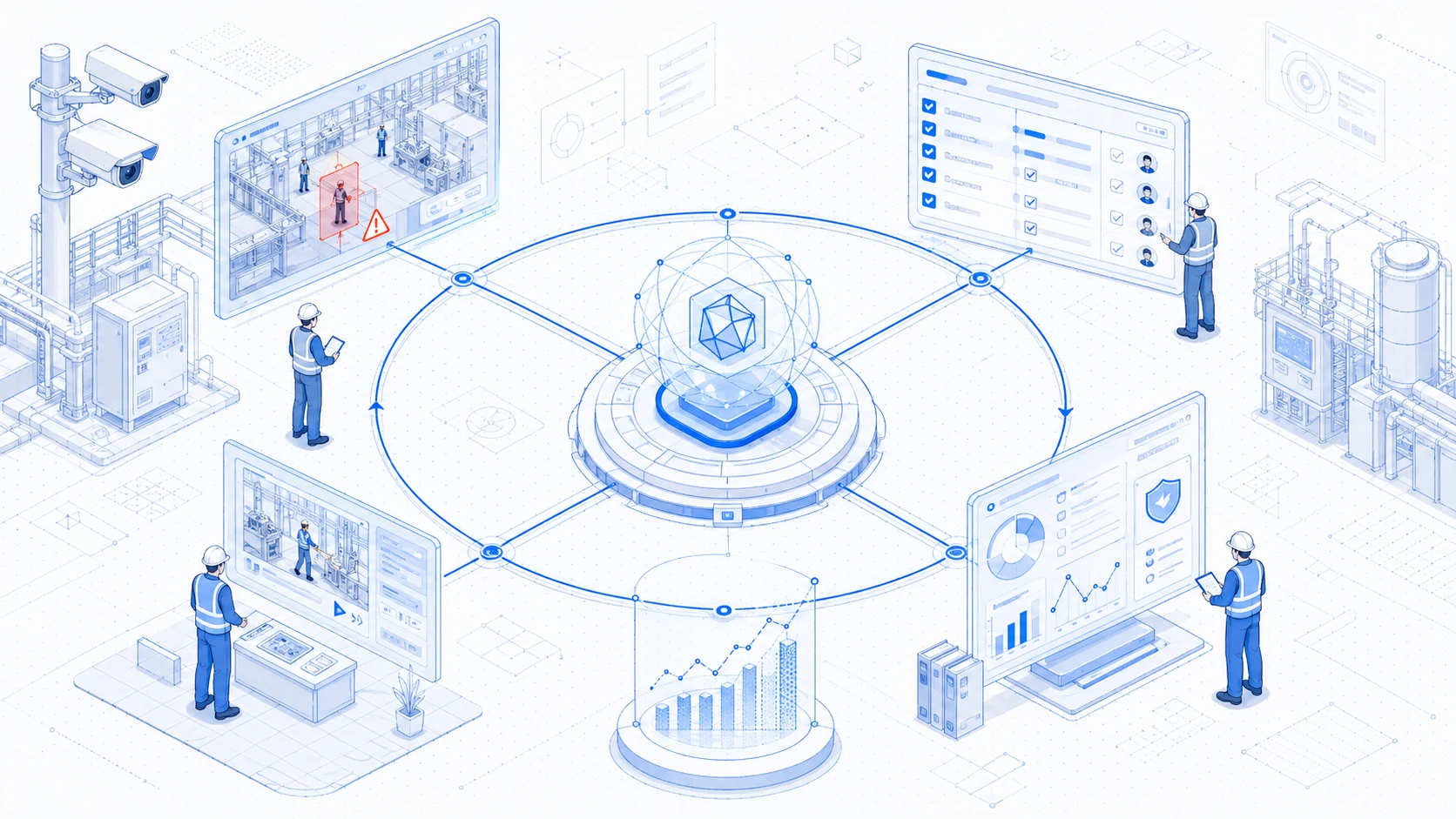
Safety has spent two decades trapped in lagging indicators — incidents counted after they happened, audits filed after the shift ended. We are building the layer in between: live site intelligence designed to support prevention while a hazard is still a signal.
AURA watches the floor through the cameras you already own, flags emerging unsafe acts and conditions, and routes them to the people who can resolve them — supervisors, EHS, the right shift, the right role. No new hardware. No new behavior to learn. Just earlier signal.
Our founders spent months on factory floors and construction sites — clipboards, near-miss logs, end-of-shift reports. The data was always late. The hazards never were.
We prototyped the AURA Engine on real CCTV feeds across manufacturing and warehousing. The DETECT → ACT → IMPROVE → PREVENT loop emerged from field reality, not a whiteboard.
SAFVR launched as a Safety Intelligence Platform across 12+ industries. Pre-built integrations replaced rip-and-replace. EHS leaders moved from lagging incident reports to leading risk signals.
We design with safety officers, supervisors, and operators — not around them. Every workflow is validated on a real floor before it ships.
Claims are paired with footage, signals, and timestamps. We surface what happened, when, and why — not vibes, not vanity metrics.
Edge-first architecture, scoped access, audit-logged events. We process what is necessary to support prevention — and nothing else.
Pilots become programs. We measure success by year-three retention and incident trends, not month-one logos on a slide.
Safety engineers, computer vision researchers, and field operators — building the layer industrial sites have been waiting for.
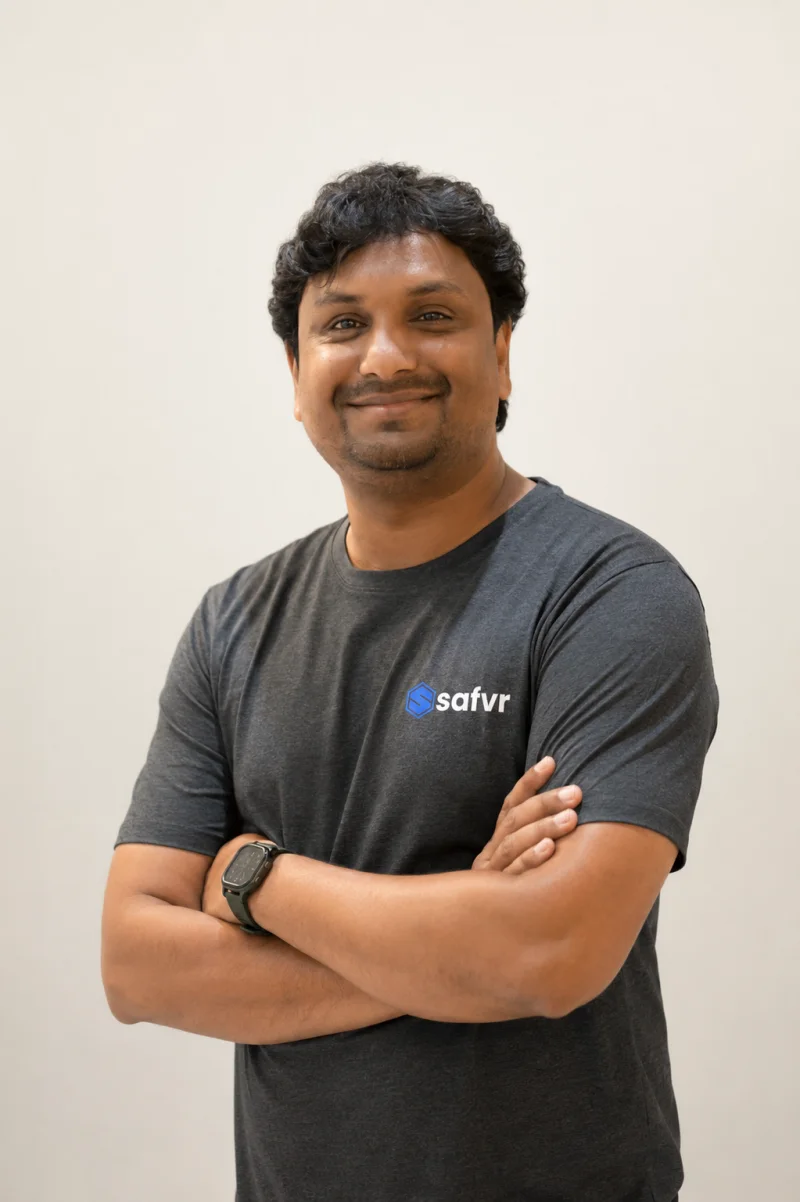
Ex-NVIDIA. 15+ years of experience driving digital transformation and enterprise technology adoption across global markets.
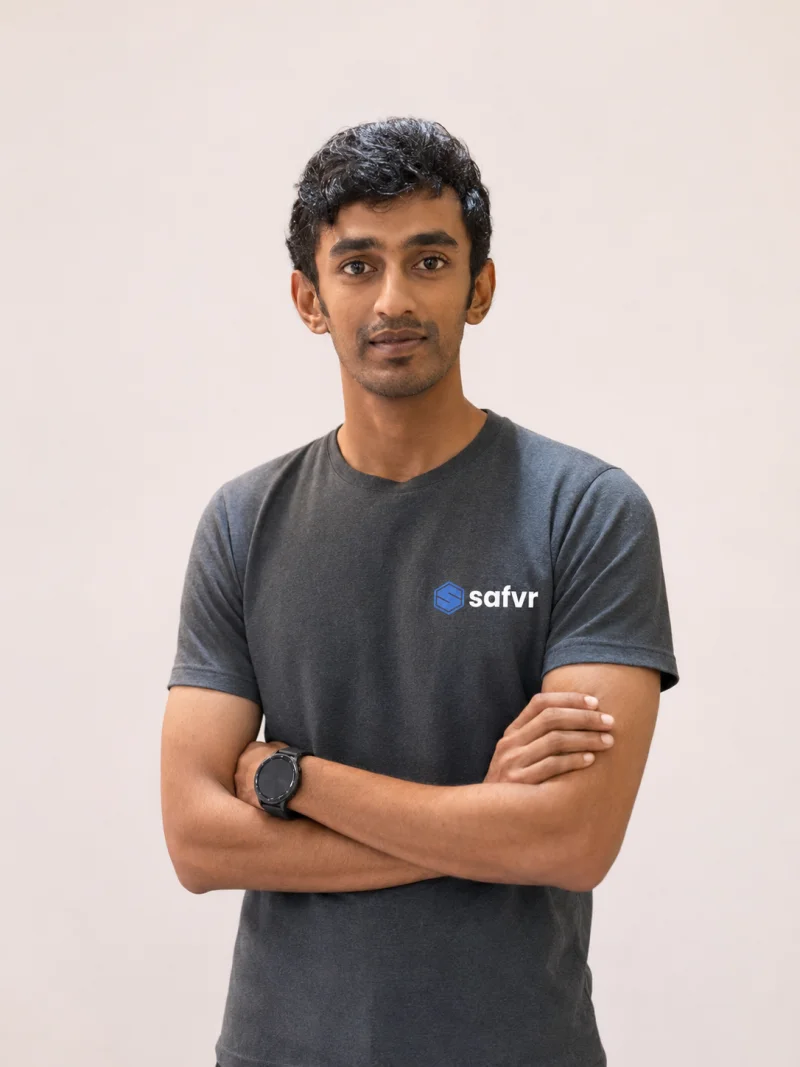
X-Prize Finalist. 6+ years building emerging technology — AI, IoT, and edge systems — for industrial operations.

Airports Authority of India


 Microsoft for Startups
Walk us through one site. We'll walk you through a 30-day pilot — designed to support measurable risk reduction before you commit to anything else.
32 Pekin Street #05-01
Singapore 048762