
181 safety observations.
72 hours.
Zero human observers.
A leading South Indian cement manufacturer ran a 72-hour AURA pilot on five existing CCTV cameras. With no new hardware, no rip-and-replace, and no on-site auditors, the system surfaced a night-shift PPE blind spot the plant had never quantified.
What the customer actually got.
Continuous detection
5 existing IP cameras × 24/7 = the equivalent of 4.6 full-time human observers, running for less than the cost of one.
Night-shift truth
57% of all PPE non-compliance happened on night shift — a window that on-site auditing had never sampled meaningfully.
Audit-grade evidence
Every observation comes with a timestamped frame and zone tag. Verification rate held at 94% across all 181 events.
The plant had cameras everywhere.
Almost no one was watching.
Like most cement plants, the customer ran an extensive CCTV network — and a manual safety audit cadence that simply could not keep up. Auditors rotated zones during the day. After 7pm, the plant kept running, but the observation function went dark.
- Hard-hat and vest compliance audited via clipboard, on a weekly cadence.
- Night-shift activity (packing, dispatch, truck loading) had no observation coverage.
- Incident reports lagged the actual event by 4–9 days on average.
- No statistical view of repeat zones, repeat times, or repeat behaviours.
- Underwriting renewals relied on the plant's own narrative — no third-party evidence.
Five cameras. Four days. One unedited dataset.
SAFVR connected to five RTSP streams already running on the plant's CCTV network. No new hardware, no on-site rewiring, no operator re-training. AURA ran continuous detection across all five feeds for 72 hours of the 4-day monitoring window.
Detection covered three PPE classes — hard hat, safety vest, and dual-PPE compliance — plus zone-specific behaviour signals (truck-loading proximity, yard pedestrian crossings, night-shift presence).
Every flagged frame was independently verified by a SAFVR analyst before inclusion in the final report. The 94% verification rate is a true post-review number, not a model-confidence score.
| Cam | Zone | Coverage | Observations |
|---|---|---|---|
| PP-1 | Packing Plant · Bay A | Inbound material handling | 47 |
| PP-1B | Packing Plant · Bay B | Bag stacking, palletizing | 31 |
| PP-2A | Packing Plant · Loadout | Loading bay, forklift lane | 38 |
| PP-2B | Packing Plant · Yard | Truck staging, night ops | 42 |
| PP-3 | Mill Floor · Crossover | Cross-zone walkways | 23 |
| Total | 181 |
70% of risk concentrated in 3 zones.
The packing plant's loading and dispatch corridor produced more PPE observations than the rest of the floor combined — exactly where weekly audits had the lowest dwell time.
The plant's biggest blind spot wasn't a zone. It was a time of day.
Auditor coverage = high. Compliance trends improve through the morning, drop after lunch break.
Auditor coverage = effectively zero. Truck loadout and yard staging produced the largest single cluster of unsafe acts.
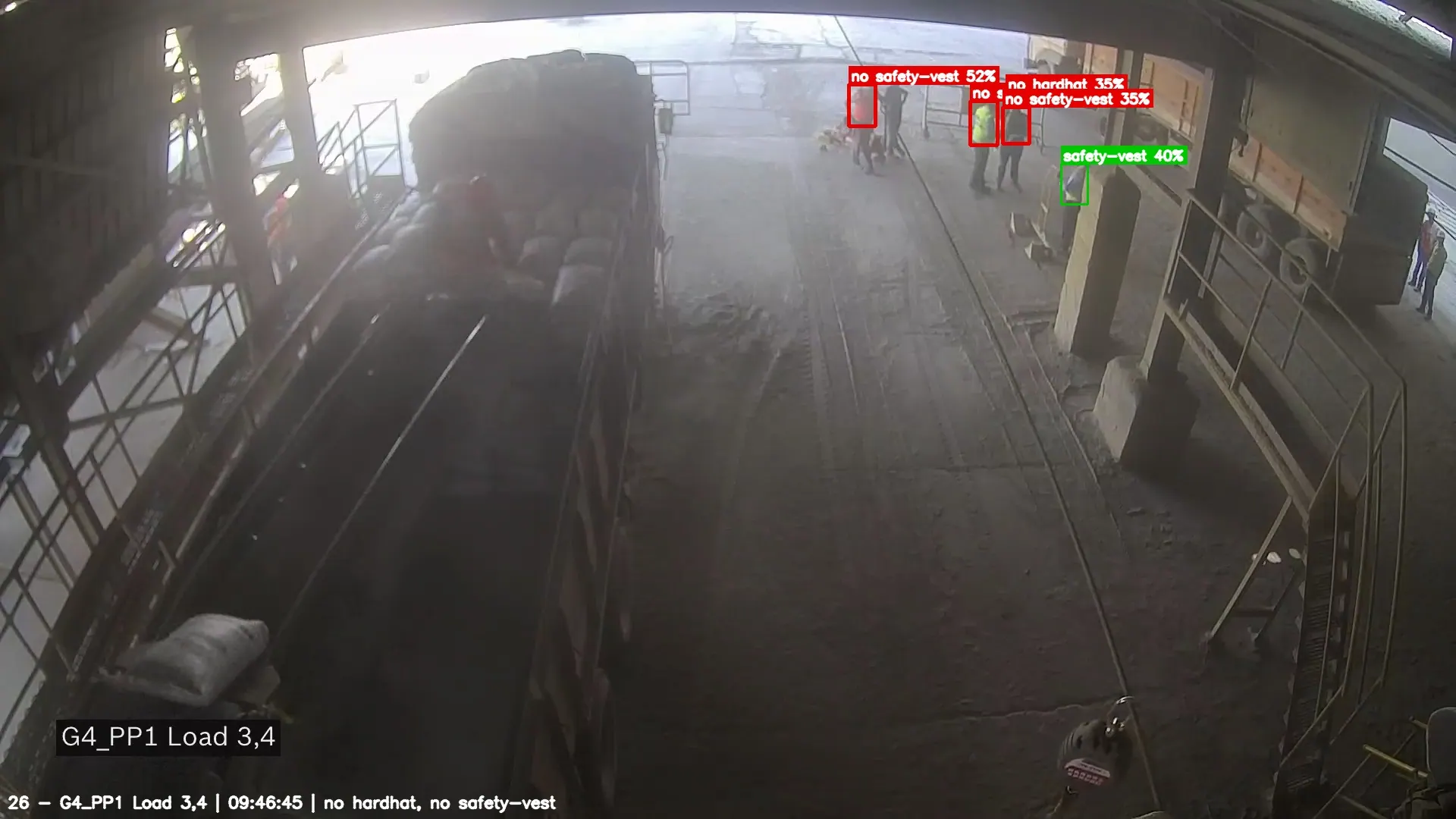
Every observation is a verifiable frame.
A representative sample of the 181 observations. Faces blurred for confidentiality; tags are unedited from AURA's output.
Day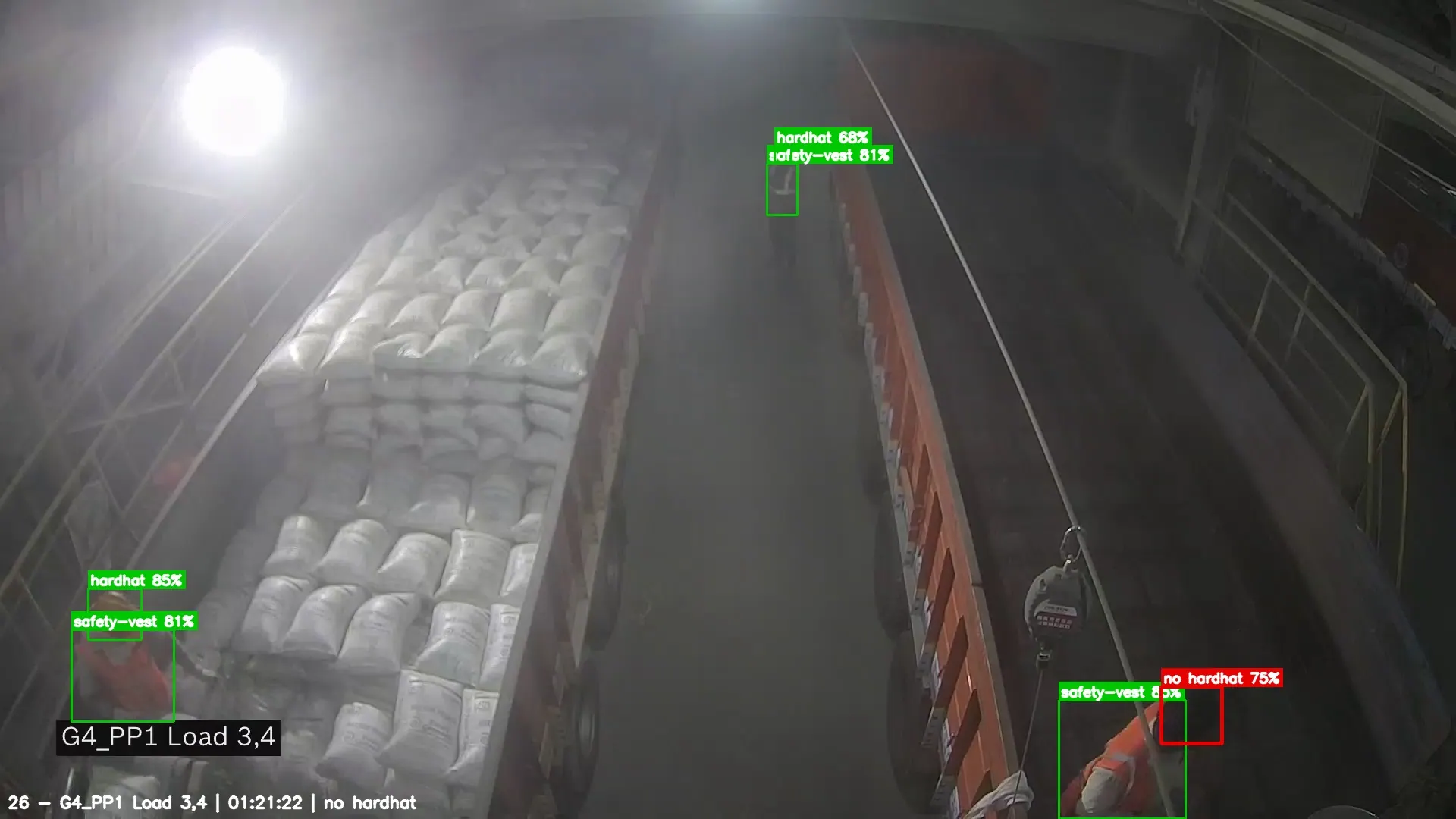 Night
Night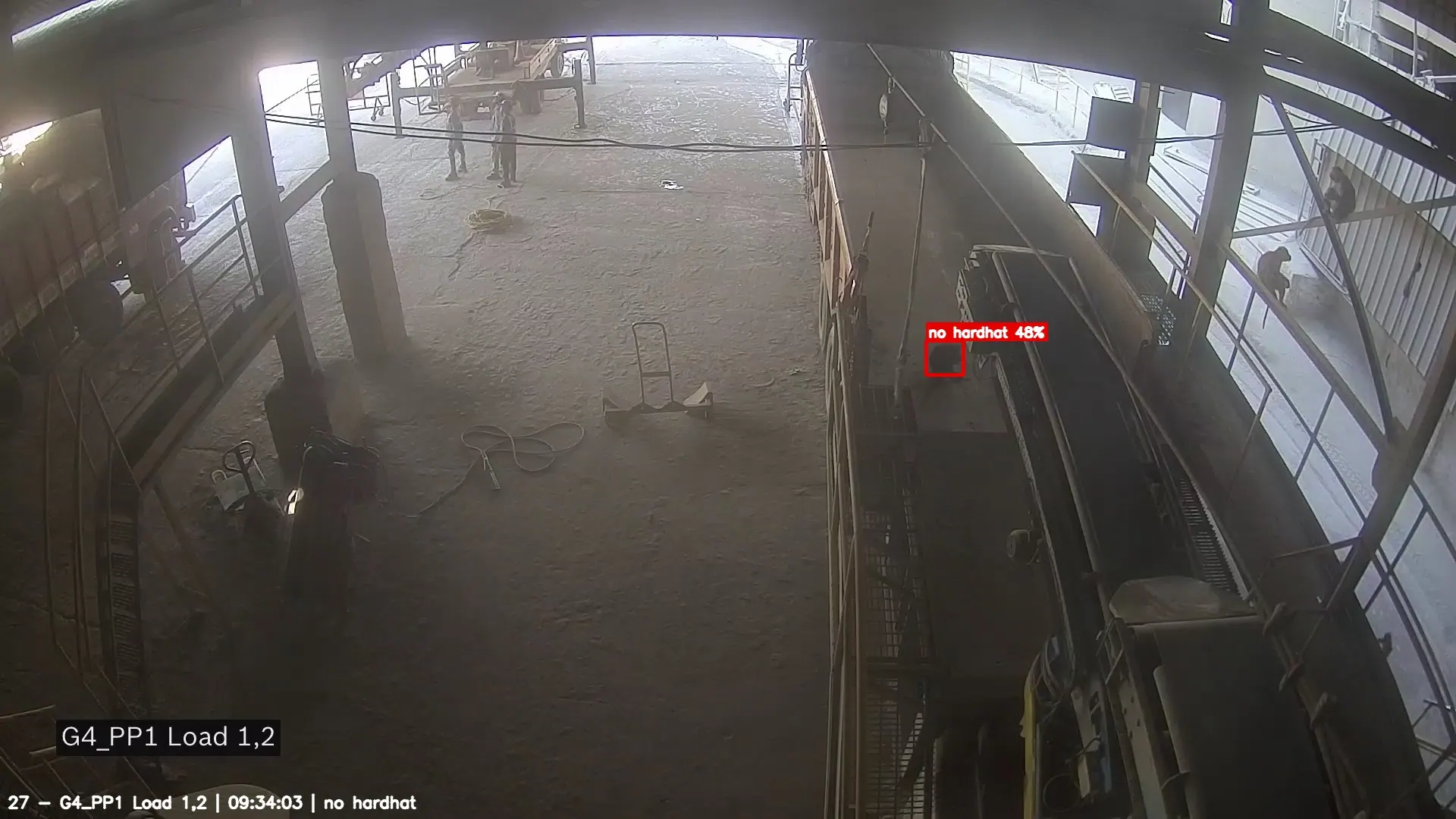 Day
Day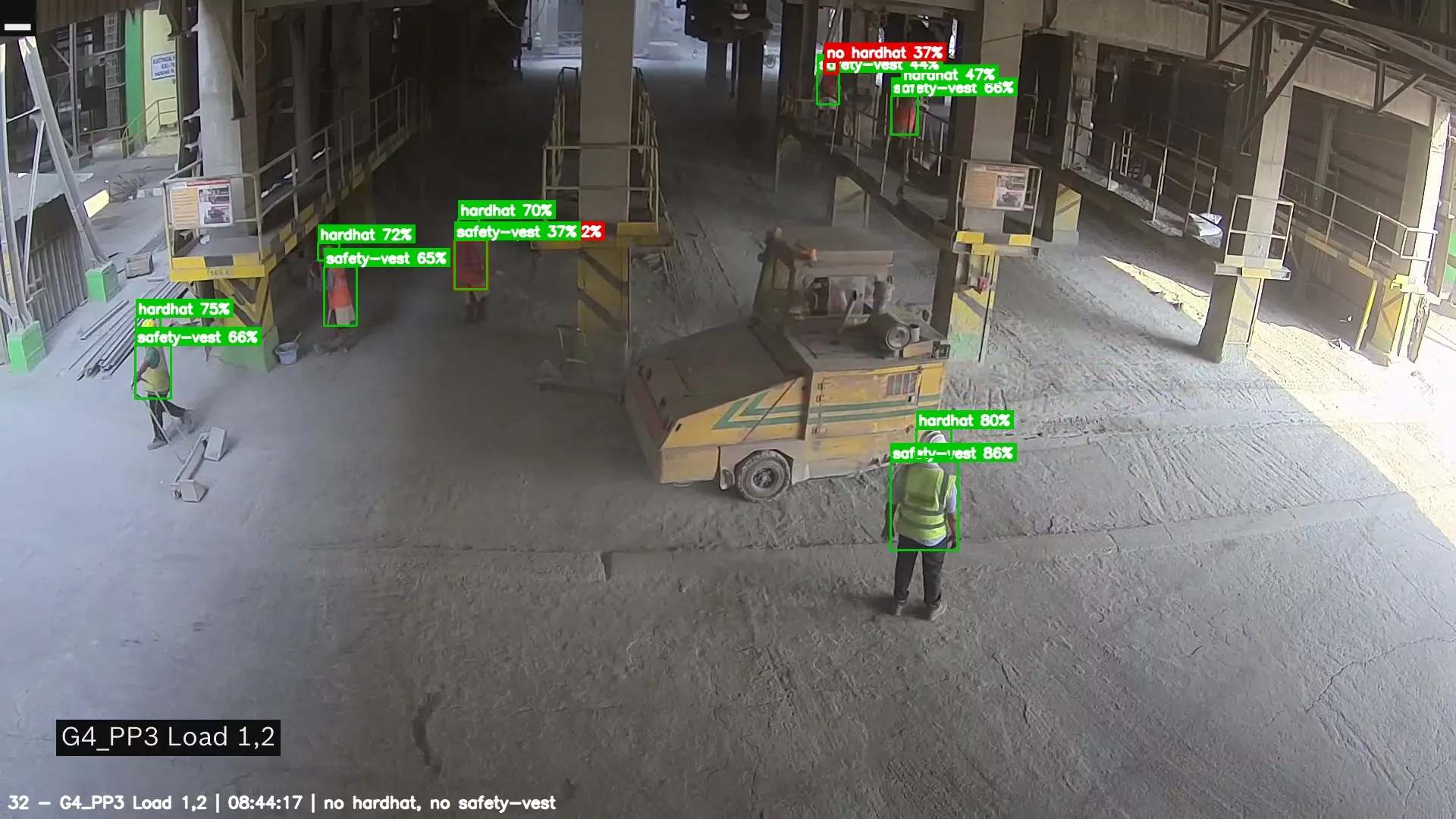 Day
Day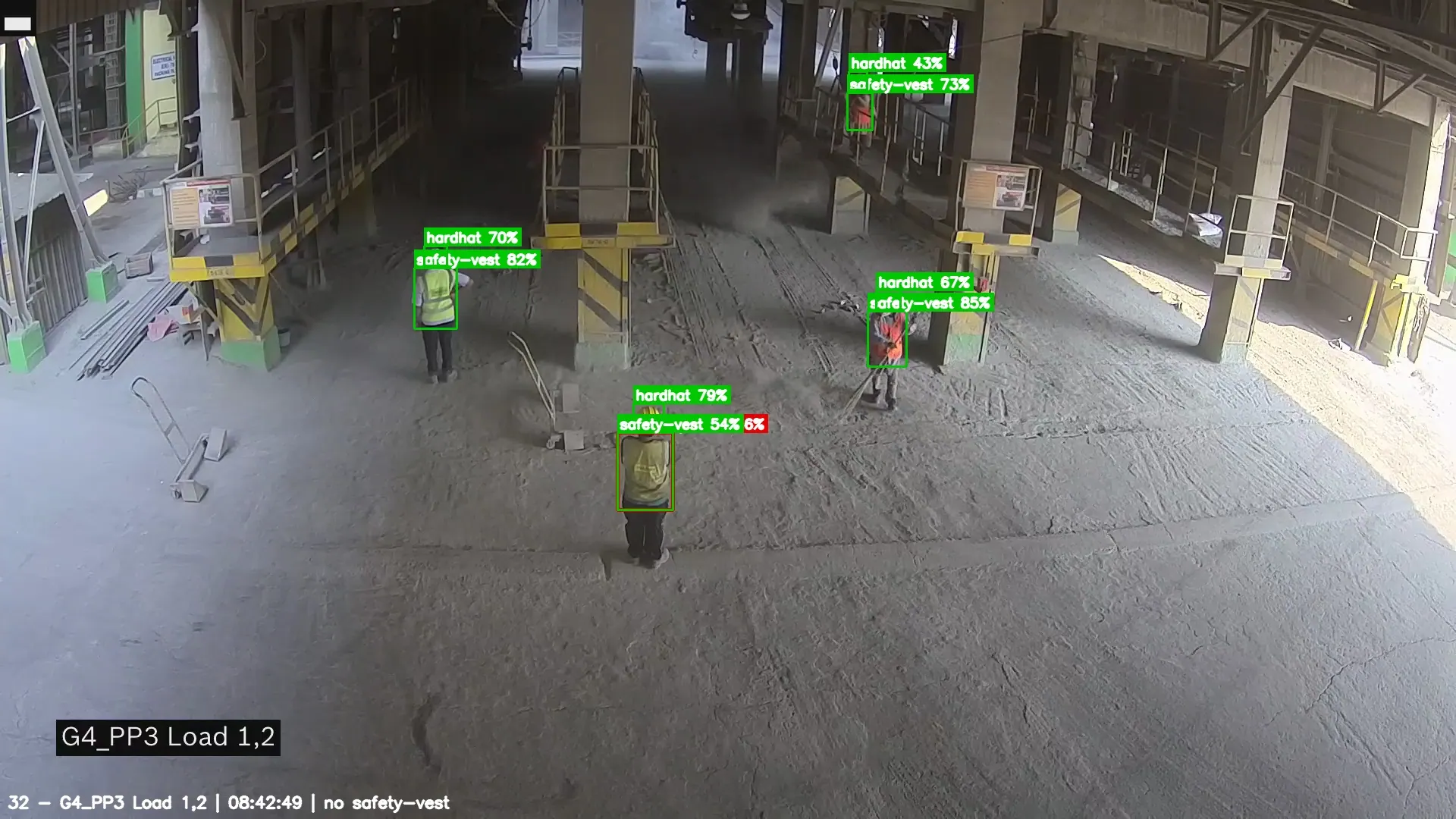 Day
Day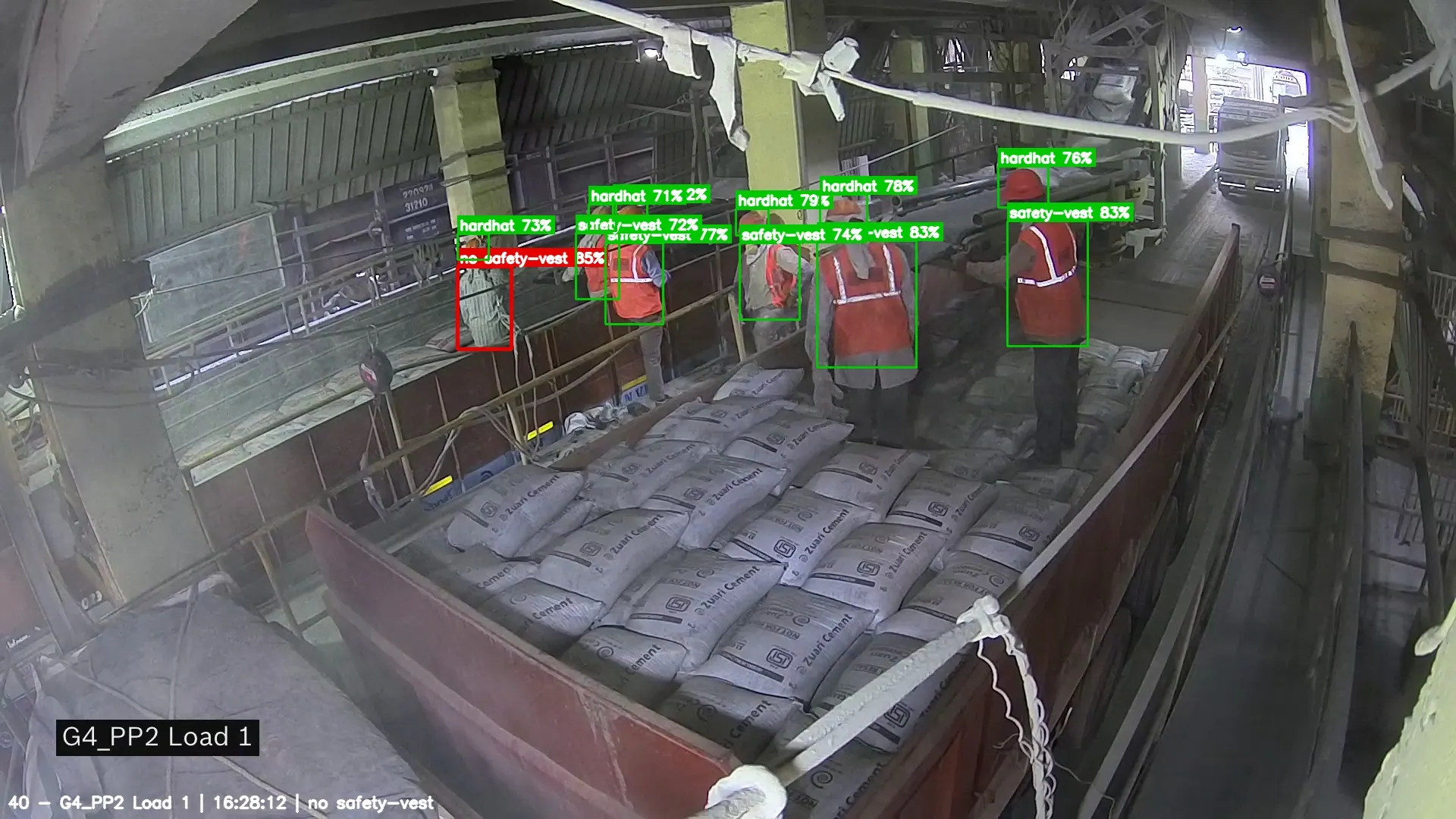 Day
Day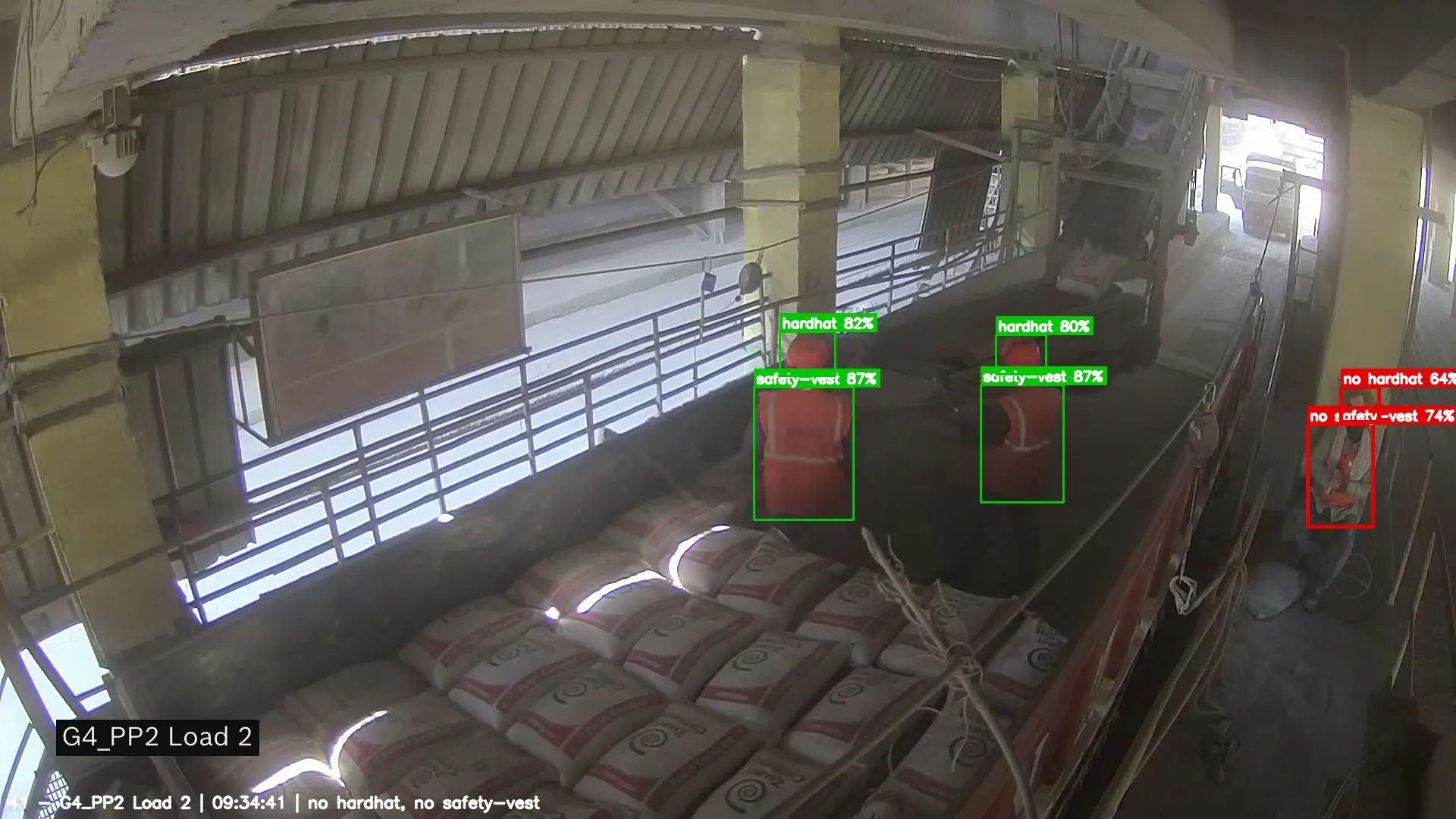 Day
Day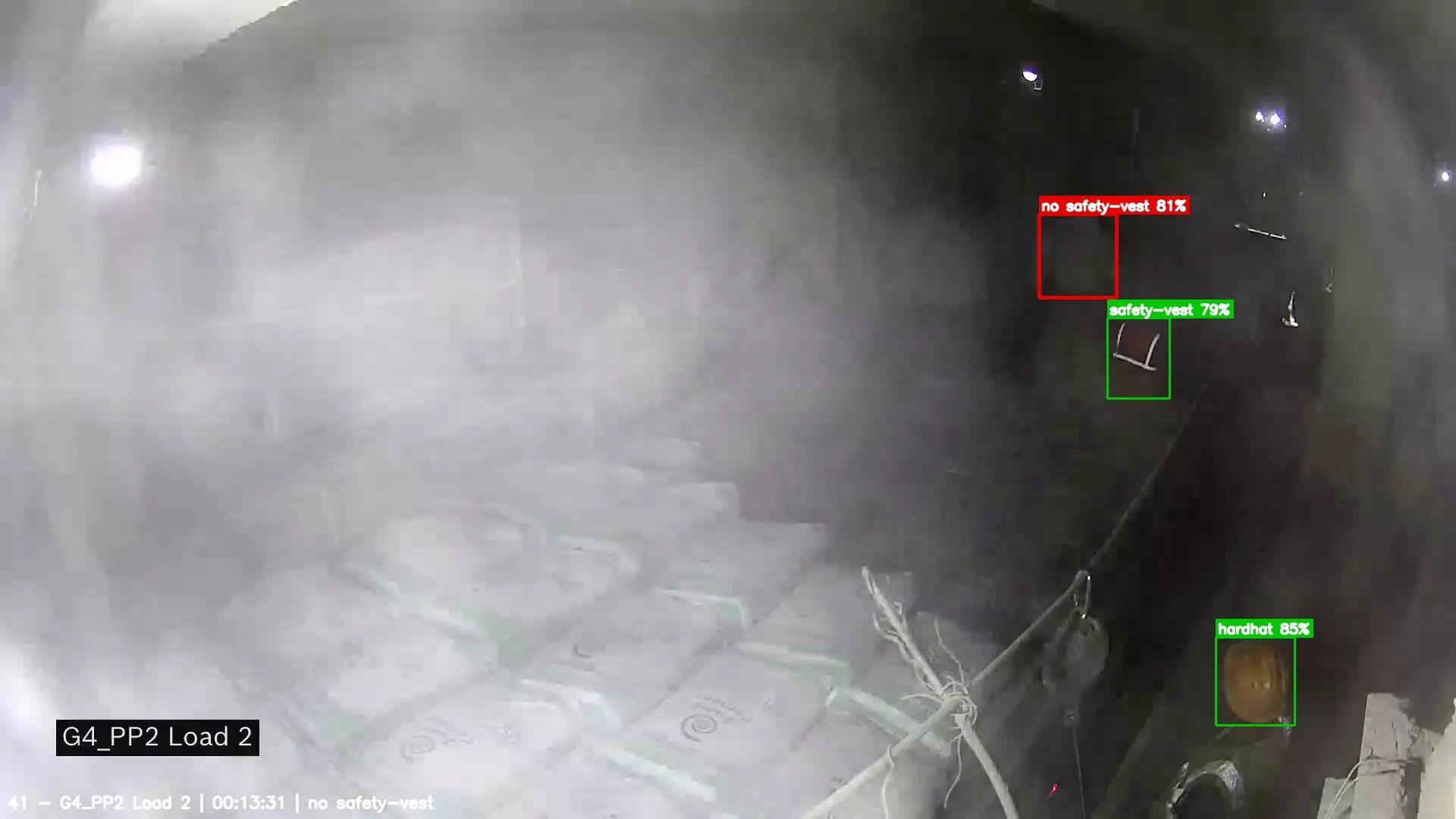 Night
NightWhat changed in 72 hours.
| Metric | Before SAFVR | With AURA |
|---|---|---|
| Observation cadence | Weekly clipboard rounds | Continuous, every frame |
| Night-shift coverage | Effectively 0% | 100% (no auditor required) |
| Time to first signal | 4–9 days post-event | < 90 minutes from feed |
| Evidence per observation | Narrative log | Timestamped frame + zone tag |
| Repeat-offender insight | Anecdotal | Statistical, by zone × time |
| Cost vs human auditor | 1 FTE / shift | 60% lower, 24/7 coverage |
Cheaper than auditors. Working when they aren't.
of continuous coverage from 5 cameras.
for the same monitored hours.
post-analyst review on all 181 observations.
“In 72 hours we got more usable safety data than the previous quarter combined. The night-shift number is what stopped me — we had no idea the gap was that wide.”
Five cameras. Thirty days. One unedited dataset of your own.
SAFVR runs a fixed-scope, fixed-fee pilot using the cameras you already have. You get the same artefacts the cement plant received: zone × time observations, verified frames, ROI modelling, and a remediation roadmap.
- Connects to existing IP cameras (RTSP/ONVIF).
- No on-prem hardware swap. Live in days, not months.
- Edge or cloud — your choice. Raw video can stay on-site.
- Fixed-fee pilot. Walk away anytime.